Greek mythologyThe shared religion with no holy book
Greek mythology is the collection of traditional stories told by the ancient Greeks about the origin of the world, their deities, heroes, and religious rituals. Instead of relying on a single holy scripture, communities shaped these tales through oral poetry over centuries to explain nature and validate local political claims. The stories survived by evolving across city-states and were later adopted directly into Roman culture under new names.
By the edgi team We find the most surprising true thing about an idea and build a 60-second lesson around it.
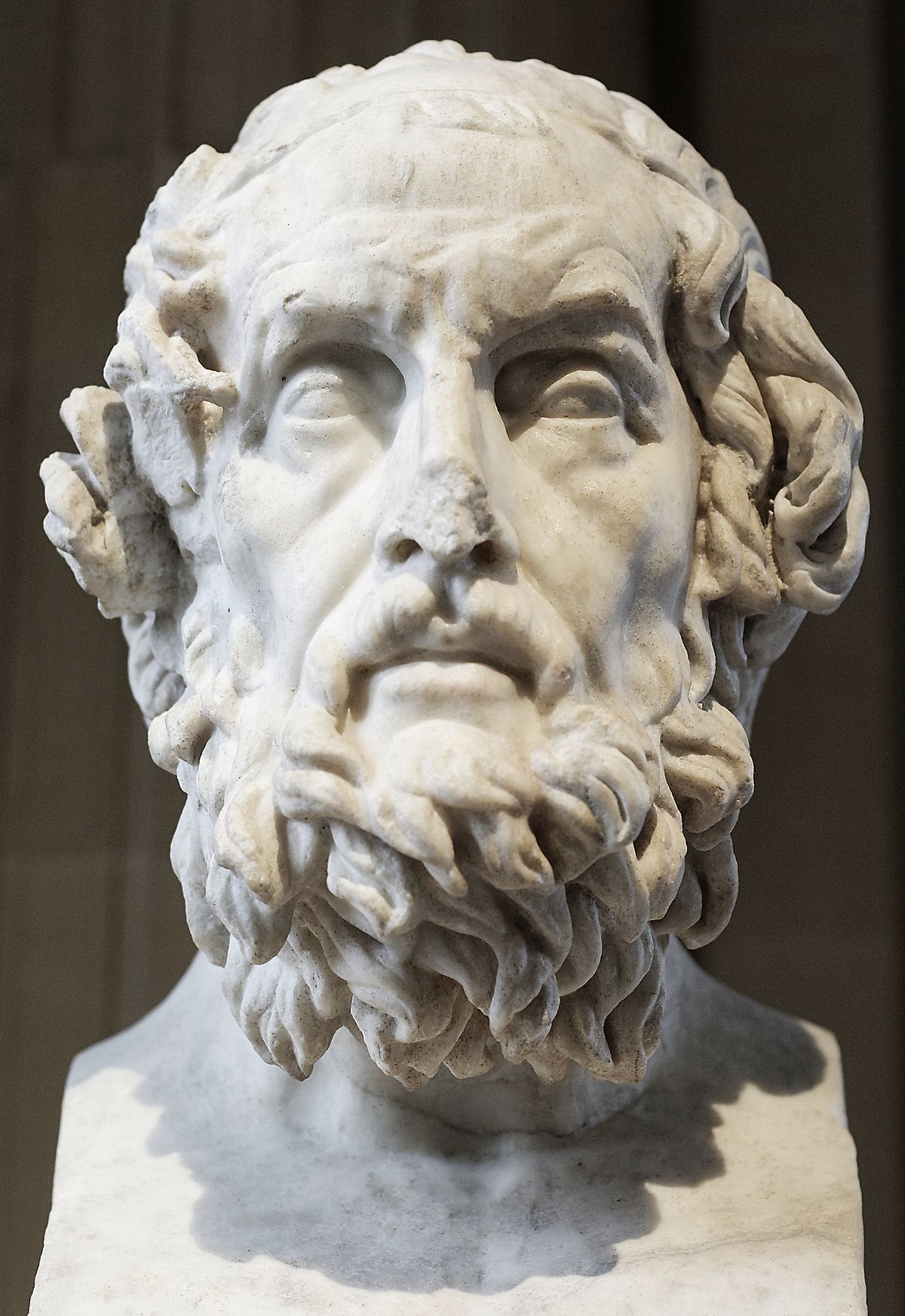
Ancient Greeks did not have a single sacred text. Myths were oral traditions that changed depending on who was telling them. Poets like Hesiod and Homer eventually wrote down versions, but they were codifiers, not authors of a final truth.
Marble bust of Homer, depicting an older man with a beard, mustache, and curly hair, with sightless eyes. Unknown authorUnknown author, Public domain, via Wikimedia Commons
This flexibility is exactly why the stories survived for thousands of years.
Gods as land deeds
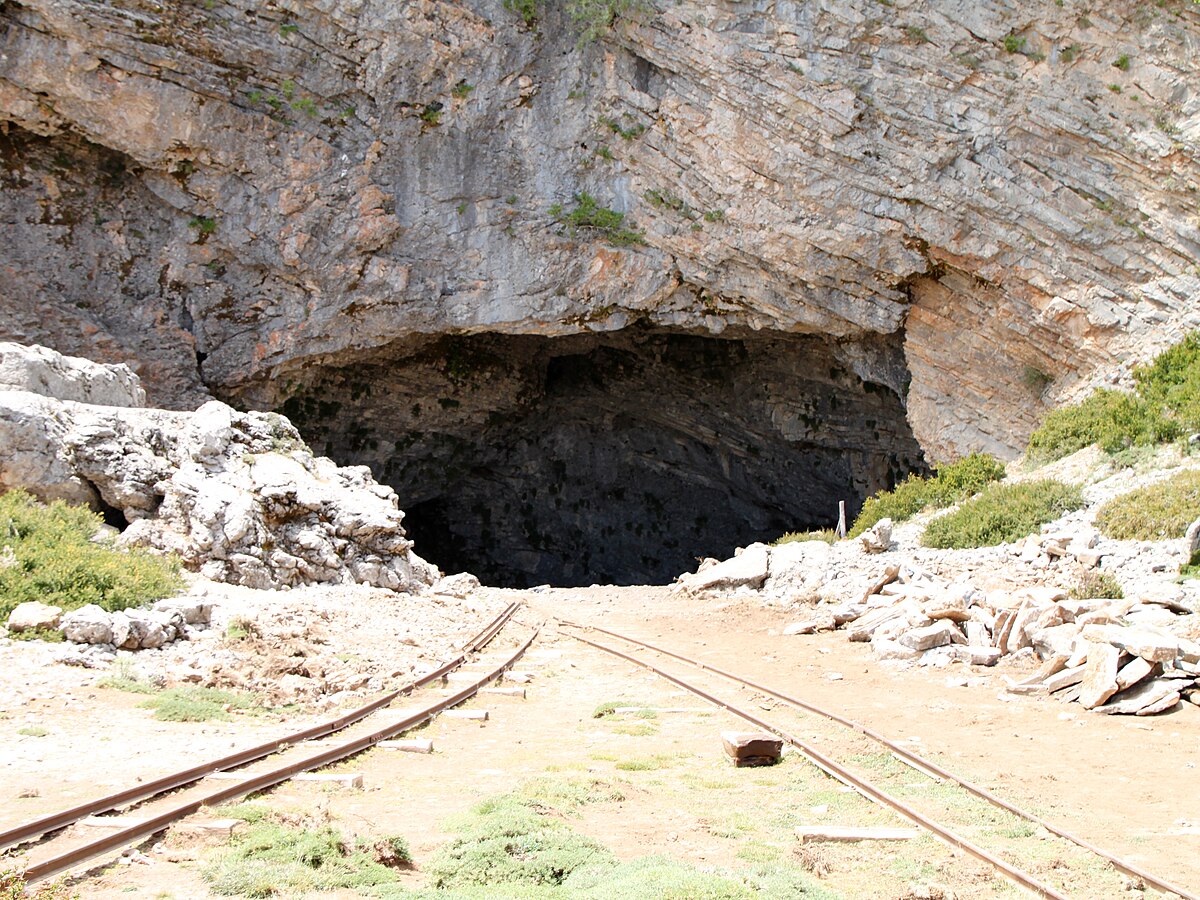
Myths were the ancient world's legal code. City-states used them to justify their political power and territorial claims. If your city claimed Zeus was born in your local cave, you held a divine mandate over your neighbors.
The Cave of Zeus on Mount Ida, Crete, is a large, dark cave entrance at the base of a rocky mountain, with two parallel tracks leading into it. Olaf Tausch, CC BY 3.0, via Wikimedia Commons
The Ancient Olympics were not just a sports meet; they were a massive religious festival to honor Zeus's supremacy.
The roman rebrand
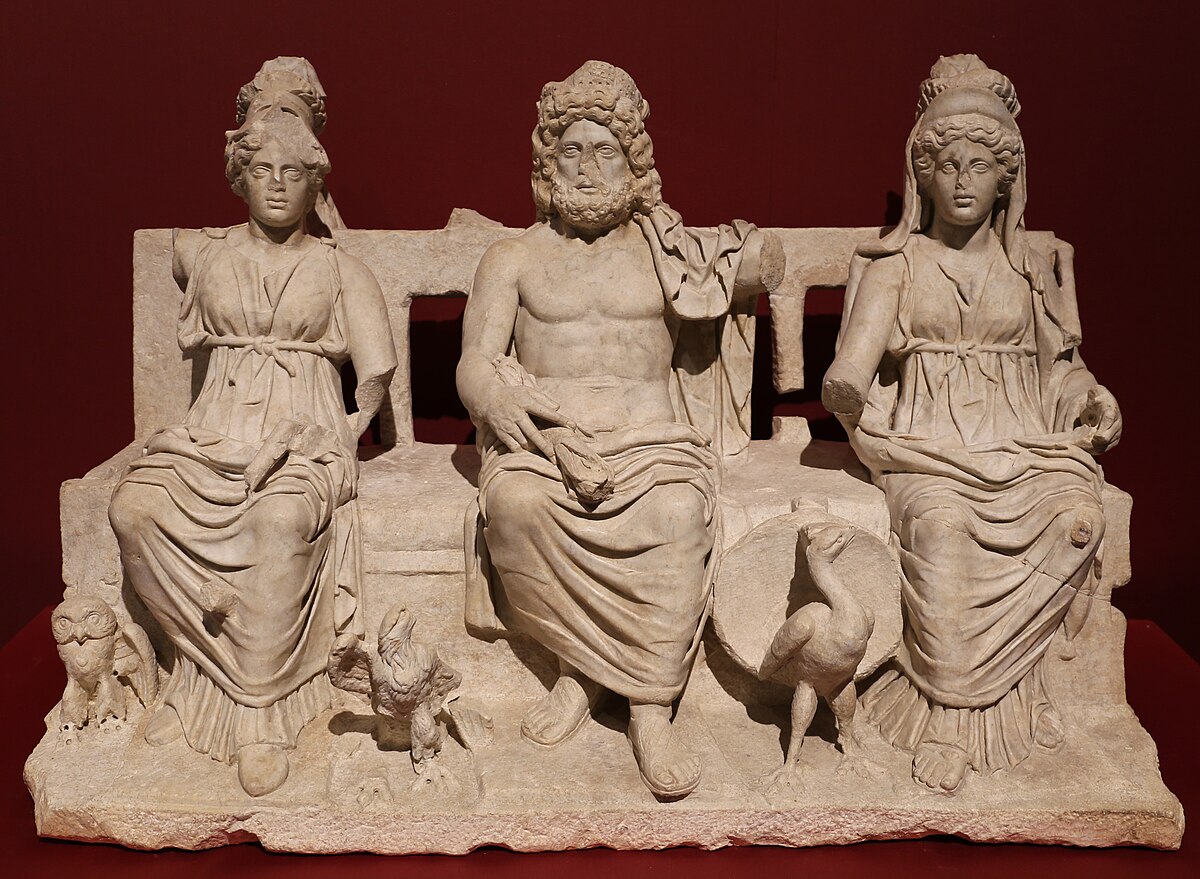
When Rome conquered Greece, they did not erase the gods; they performed the ultimate corporate rebrand. They adopted the Greek pantheon, swapped the names, Zeus became Jupiter, Ares became Mars, and claimed the prestige for themselves.
A marble sculpture of the Capitoline Triad, depicting Jupiter enthroned in the center, flanked by Juno on the left and Minerva on the right. Sailko, CC BY 3.0, via Wikimedia Commons
The gods never died; they just moved into a new empire and changed their business cards.
How were the myths recorded?
Greek myths began as an oral-poetic tradition, most likely sung by Minoan and Mycenaean performers starting in the 18th century BC. Because these tales were spoken rather than dictated by a central authority, they constantly shifted across regions and centuries.
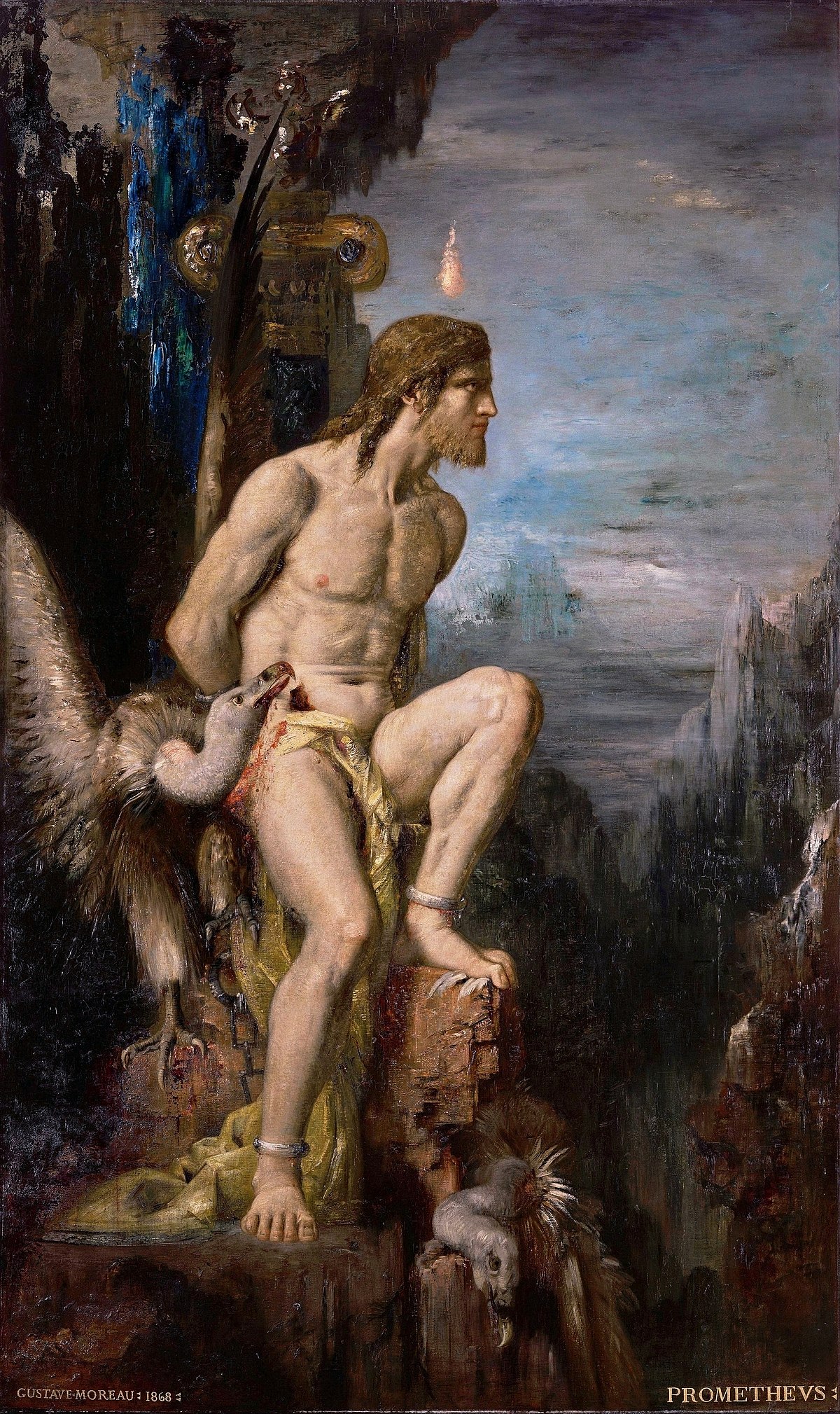
This painting depicts Prometheus, a figure first recorded in Hesiod's poetry before becoming the subject of ancient tragic plays. Gustave Moreau, Public domain, via Wikimedia Commons
Poets later turned these flexible oral legends into written works. Homer framed the Trojan War and its aftermath in the Iliad and the Odyssey. His contemporary Hesiod composed the Theogony and Works and Days, which outlined the birth of the gods, the succession of divine rulers, and famous tales such as Prometheus and Pandora. Later, Athenian playwrights like Aeschylus, Sophocles, and Euripides adapted these heroic stories into classic stage tragedies.
What physical evidence survives?
Archaeology provides an essential counterpart to ancient texts. Mythological scenes appear as early as the Geometric period, between roughly 900 BC and 800 BC, decorating pottery and votive gifts.
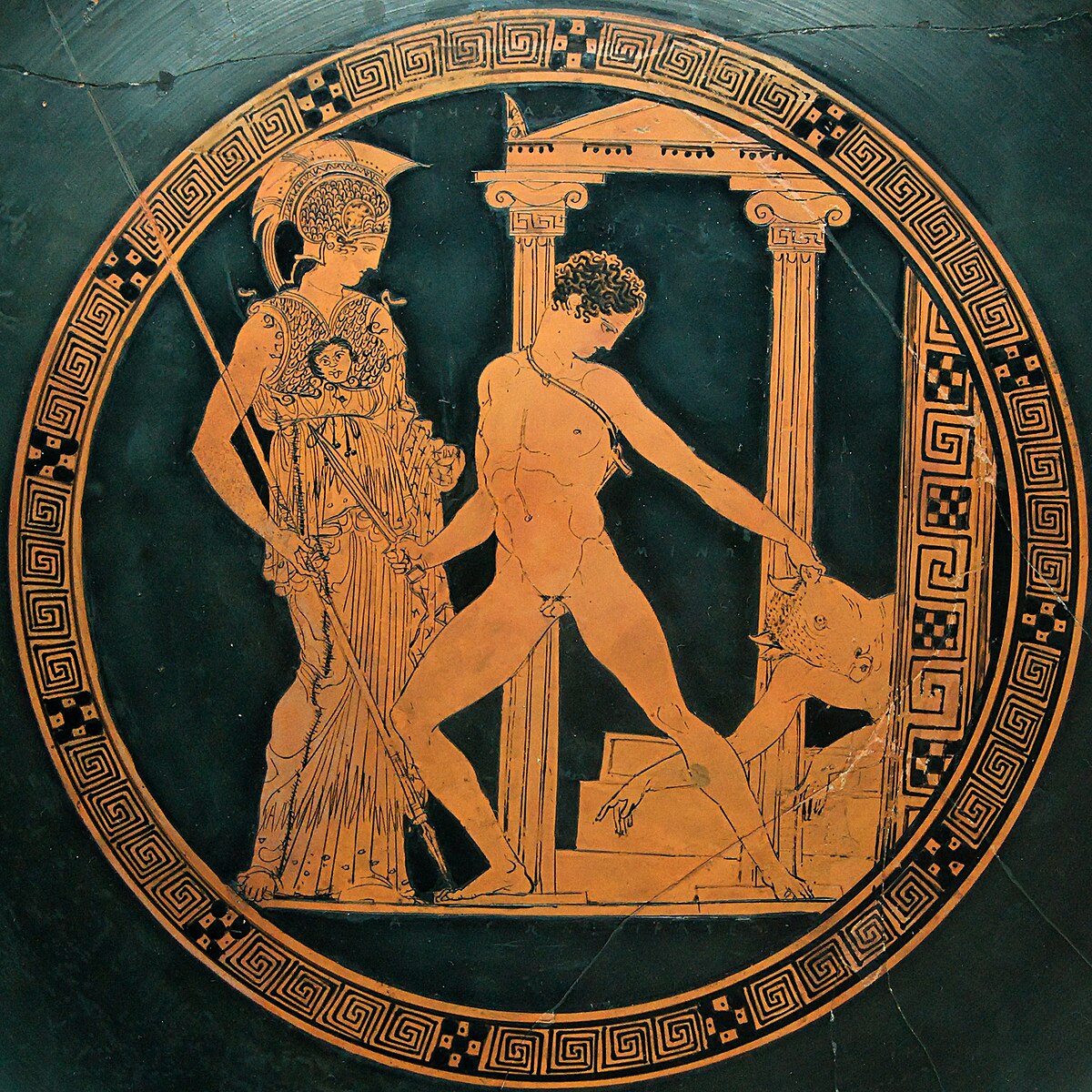
A red-figure kylix shows Theseus slaying the Minotaur alongside Athena, illustrating how Greeks preserved hero tales on everyday pottery. Aison, CC BY 2.5, via Wikimedia Commons
Painted vases frequently depict the labors of Heracles or episodes from epic poetry. These visual artifacts do not always match surviving written texts. Instead, they often intersect with literature, either confirming written accounts or revealing contradictory local traditions.
How did Rome adopt the Greek gods?
When Rome expanded over the Greek world, it absorbed the Greek pantheon into its own traditions. Roman authors kept the core narratives while substituting Latin names, renaming Zeus as Jupiter and Ares as Mars.
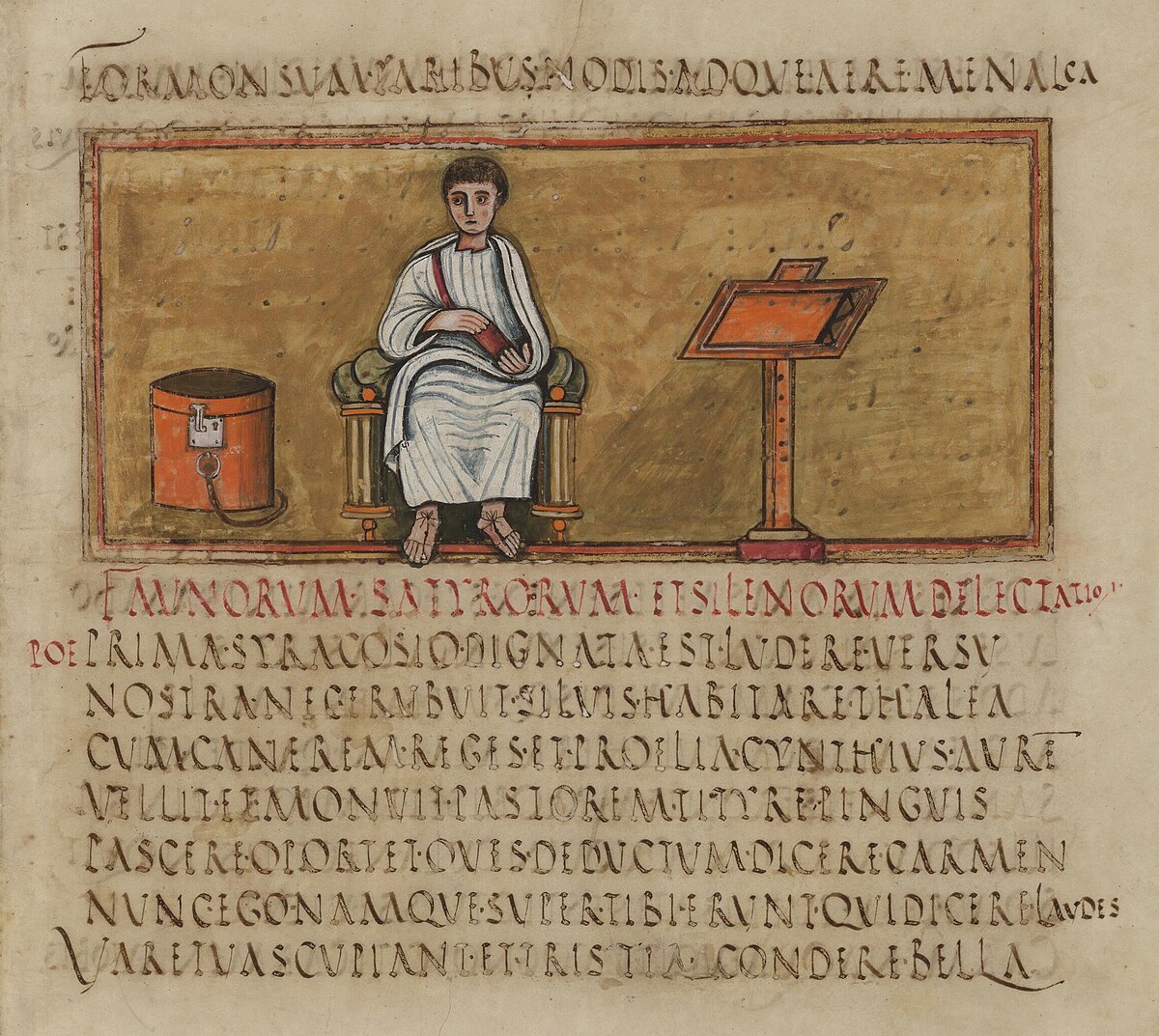
An ancient portrait of Virgil, a Roman poet whose works preserved many Greek mythological traditions under Roman rule. Unknown authorUnknown author, Public domain, via Wikimedia Commons
Roman writers like Ovid, Virgil, and Seneca incorporated Greek myths into their own poetry and drama. While much of this later writing was composed as a literary exercise rather than for religious cults, it preserved detailed versions of ancient Greek legends that would have otherwise vanished.
Test yourself
Greek gods were always perfect moral examples for humans.
False. Greek gods could be powerful yet flawed, jealous, or deceptive in myths.
What do the Moirai do in Greek myth?
Spin, measure and cut life's thread. Clotho spins, Lachesis measures and Atropos cuts the thread of each life, which pictures a life as having a set length.
Aegisthus ignores a divine warning and is killed. What does Zeus's comment imply?
Mortals are blamed for some choices. Zeus says mortals bring suffering on themselves beyond what is fated. Fate sets the frame, but choices inside it still carry responsibility.
Play the lesson in edgi and the card is yours. It lands on your Map next to the ideas it connects to, and turns from matte to foil to gold as you learn more around it.
It is the only comprehensive mythographical handbook to survive intact from Greek antiquity. The text compiles traditional heroic legends and attempts to harmonize the contradictory tales recorded by different poets.
Did ancient Greek historians record myths?
Yes, ancient historians and geographers such as Herodotus, Pausanias, and Strabo collected local stories throughout their travels. Herodotus examined these tales to identify the historical roots and cultural blending behind the conflicts between Greece and neighboring regions.