HoroscopeWhy charts track math, not constellations
A horoscope is an astrological chart or diagram that maps the positions of the Sun, Moon, and planets over a specific location at an exact moment in time. While commonly associated with daily personality readings, it originated as a technical tool used by ancient rulers to track state events. Modern scientific testing classifies its predictive claims as pseudoscience, showing no effect beyond chance.
By the edgi team We find the most surprising true thing about an idea and build a 60-second lesson around it.
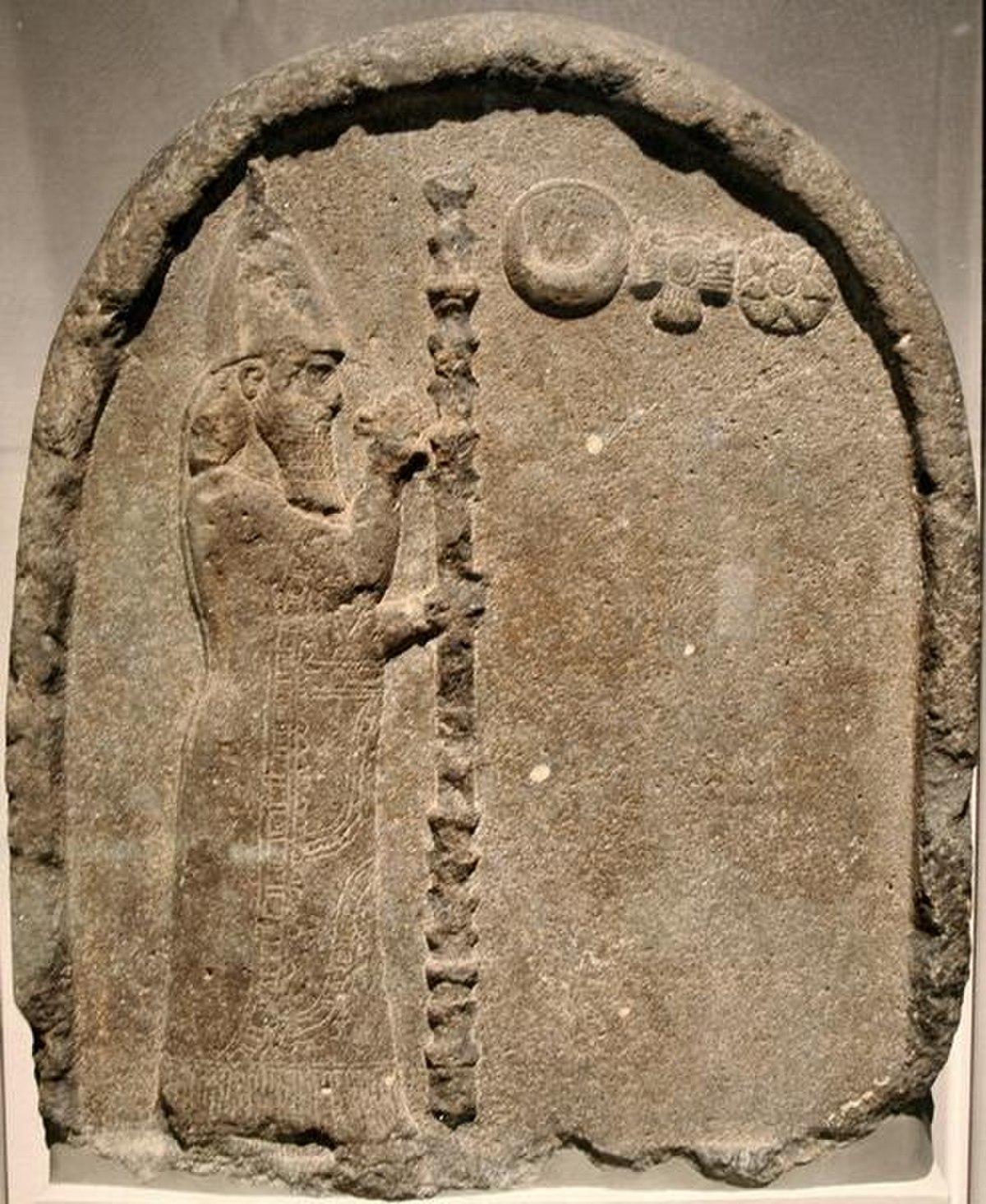
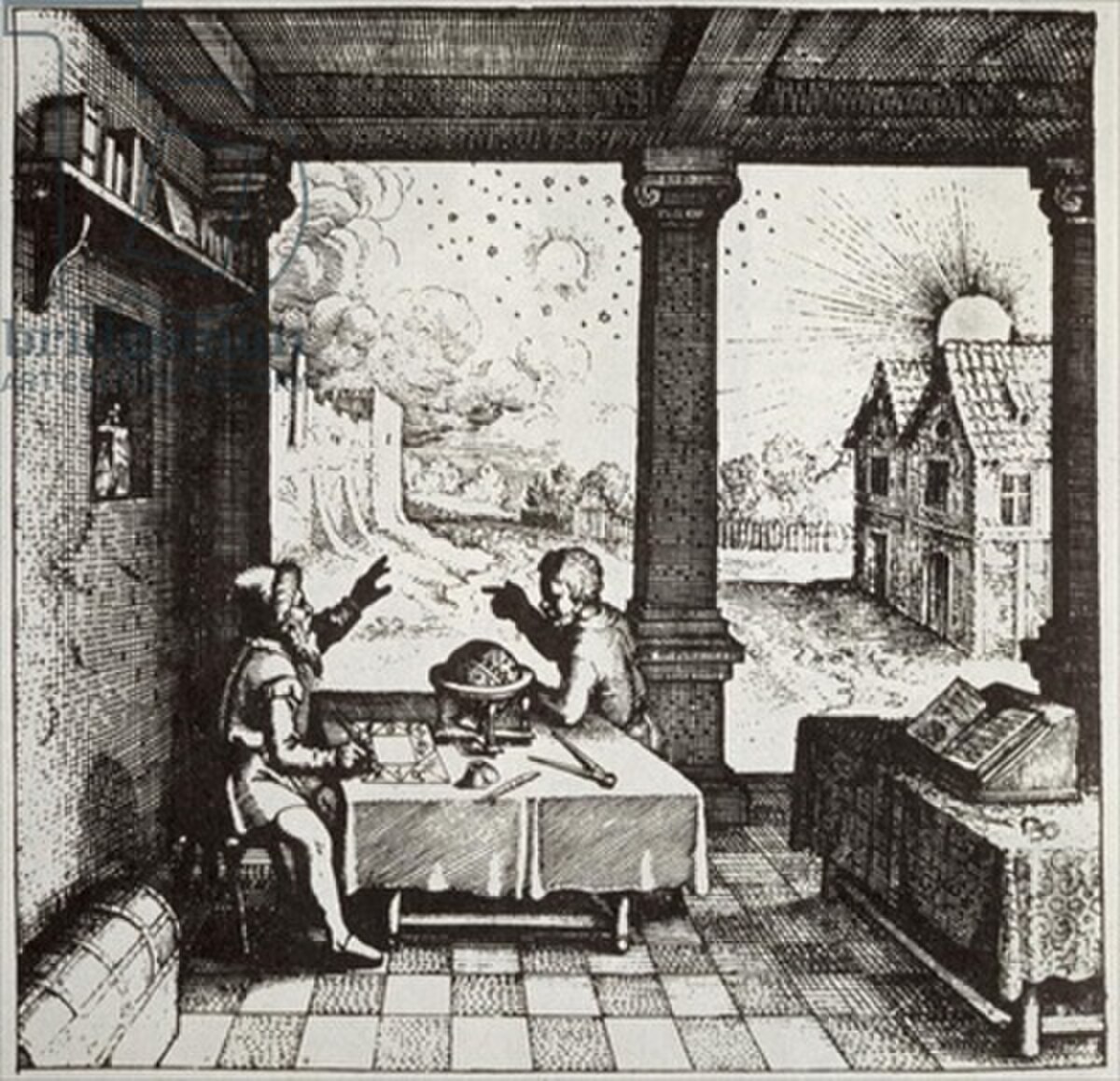
In 410 BC, a Babylonian scholar recorded the first known personal horoscope on a clay tablet for a child born on April 29th. Before this, astrology was a state-level tool used to predict the fate of kings or the timing of floods, rather than the lives of common people.
A stele depicting Nabonidus, the Babylonian king, praying to celestial bodies: the moon, the sun, and the planet Venus. CC BY 3.0, via Wikimedia Commons
The ancient scribe painstakingly noted the position of the Moon and planets relative to the horizon, creating the prototype for all future natal charts.
The geometry
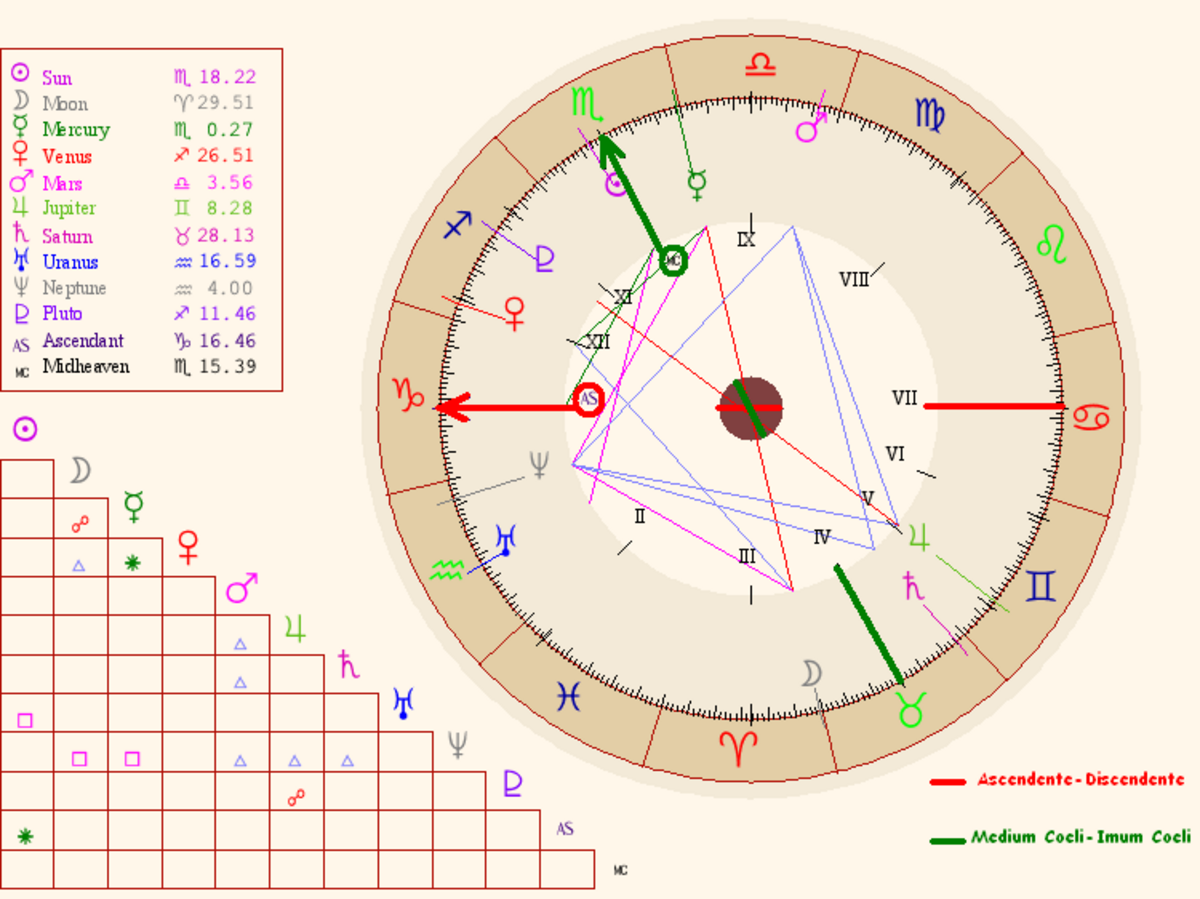
A horoscope is not a generic personality profile; it is a precise mathematical snapshot of the sky taken at the exact second of an event. By mapping the degrees of the planets against the 360-degree circle of the sky, astrologers create a unique geometric web.
An example birth chart or horoscope, displaying astrological symbols, planetary positions, and houses in a circular diagram. No machine-readable author provided. Leopanza~commonswiki assumed (based on copyright claims)., CC BY-SA 3.0, via Wikimedia Commons
This system relies on the zodiac to act as a celestial measuring tape, dividing the sun's apparent path into twelve equal sectors.
The shifting sky
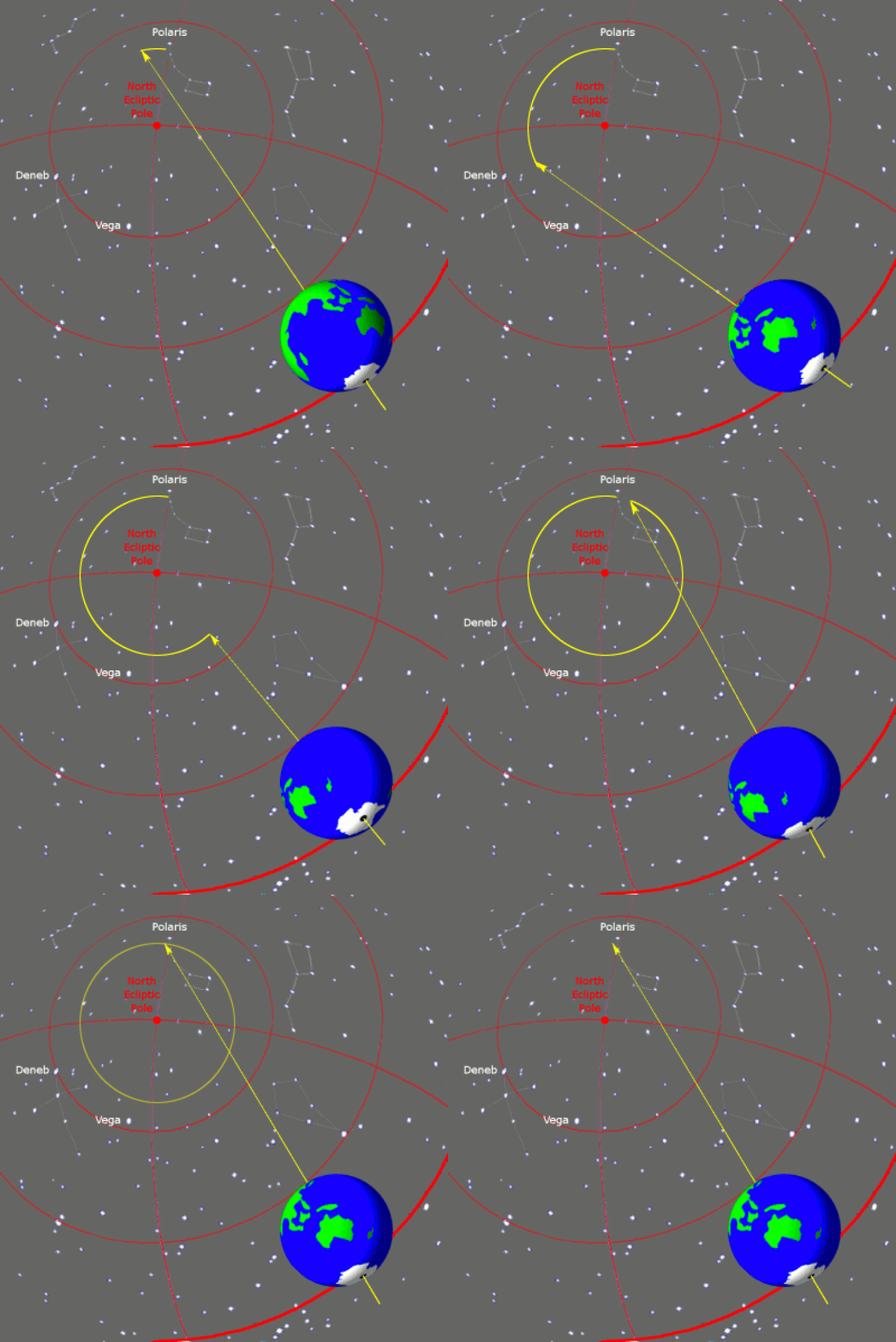
Modern Western astrology pins its signs to the equinoxes, not the stars, which have drifted out of line due to the Earth's wobble. The system focuses on the astrological aspect, the specific angles formed between planets that supposedly trigger life's major turning points.
Diagram illustrating the 25,700-year cycle of axial precession, showing the Earth's axis precessing around the North Ecliptic Pole. Tfr000 (talk) 14:59, 14 May 2012 (UTC), CC BY-SA 3.0, via Wikimedia Commons
Even today, millions of people look at a chart to find meaning in the silent geometry of the solar system.
What is inside a natal chart?
A horoscope acts as a stylized map of the heavens viewed from Earth at the moment of an event, such as a birth. The subject of the chart, called the native, sits at the center of an imaginary celestial sphere onto which planets, zodiac signs, and calculated points are projected.
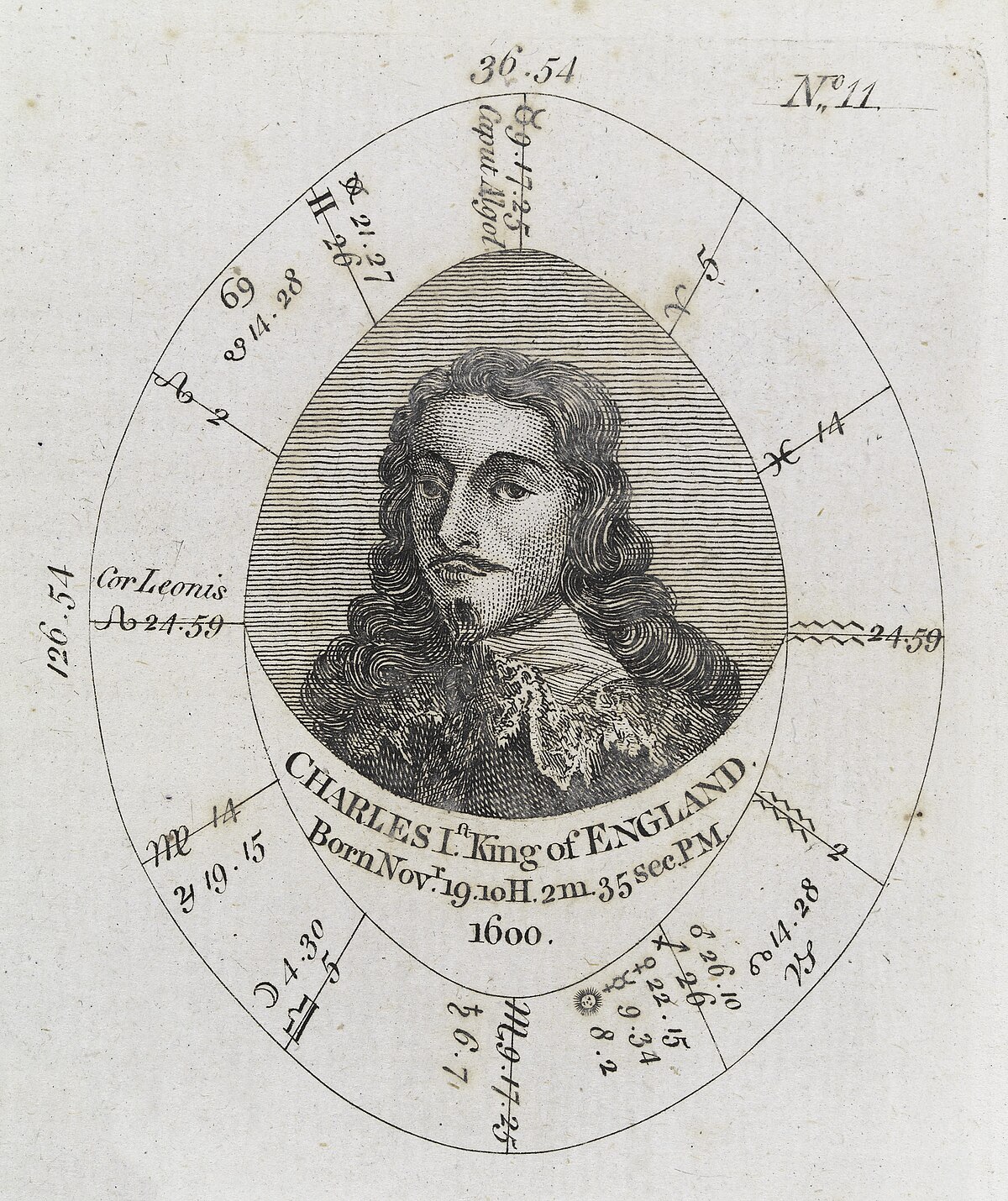
This astrological birth chart shows the geometric angles and planetary placements calculated for Charles I of England. CC BY 4.0, via Wikimedia Commons
The chart relies on four primary angles formed where planes intersect. The most significant are the Ascendant, located at the eastern horizon where the sun rises, and the Midheaven at the top of the chart. Astrologers calculate aspects, which are the geometric angles formed between planets, to interpret an individual's traits or potential life turning points.
How do different traditions use horoscopes?
In popular Western media, horoscopes usually take the form of Sun sign columns. These interpretations rely strictly on the zodiac sign the Sun occupied during the month of a person's birth, sometimes dividing the month into ten-day periods called decants or accounting for two-day overlaps called cusps.
Hindu astrology uses birth charts called kundali, which map the movements of the Moon and stars. A kundali records details such as rashi, nakshatra, tithi, and D-charts. Families analyze these charts to evaluate personality traits and identify auspicious timings for important milestones, such as matching prospective partners before a marriage.
Why scientific tests fail to validate horoscopes
Astrology has been recognized as pseudoscientific since the 18th century. In controlled scientific trials with proper blinding and control groups, horoscope interpretations perform no better than pure chance. Physical science knows of no mechanism or interaction capable of transmitting celestial influence from distant planets to a newborn infant.
The perceived accuracy of horoscope readings is largely explained by psychology. The Forer effect, also known as the Barnum effect, demonstrates that people readily accept vague, generic personality statements as uniquely personal descriptions of themselves.
Test yourself
Which detail most changes your rising sign?
Birth time. The sky turns once a day, so the sign on the eastern horizon changes about every two hours. Time of day therefore matters most for the rising sign.
Twins are born 3 hours apart in one city. What is most likely different in their charts?
The rising sign and house placements. The Sun stays in one sign for about a month, so both share it. Three hours is enough for the horizon to shift to a new rising sign, which changes the houses.
In Carlson's test, how did astrologers do at matching charts to people?
About as well as guessing. Astrologers matched about one in three, the rate you get from guessing among three options. That means the chart gave them no usable information about the person.
Play the lesson in edgi and the card is yours. It lands on your Map next to the ideas it connects to, and turns from matte to foil to gold as you learn more around it.
The term comes from the Greek words ora, meaning time or hour, and scopos, meaning observer or watcher. Historically, it referred to the observation of the ascendant marker at the time of an event.
What is the difference between a natal chart and a newspaper horoscope?
A natal chart is a complex geometric map recording the precise positions of all planets, houses, and angles at the exact moment of birth. Newspaper horoscopes simplify this by focusing almost entirely on the month-based Sun sign.