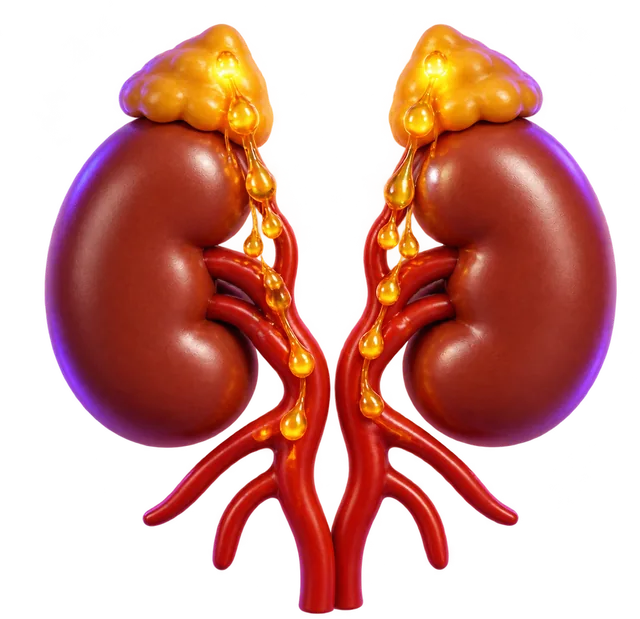
Adrenaline is a hormone produced by the adrenal glands that prepares your body to react to danger or stress. It raises your heart rate, widens airways, dilates pupils, and boosts blood sugar levels by acting on specialized receptors across your organs. Beyond its natural role in the body, it serves as an emergency medicine that can reverse fatal allergic reactions and restart a stopped heart.
By the edgi team We find the most surprising true thing about an idea and build a 60-second lesson around it.
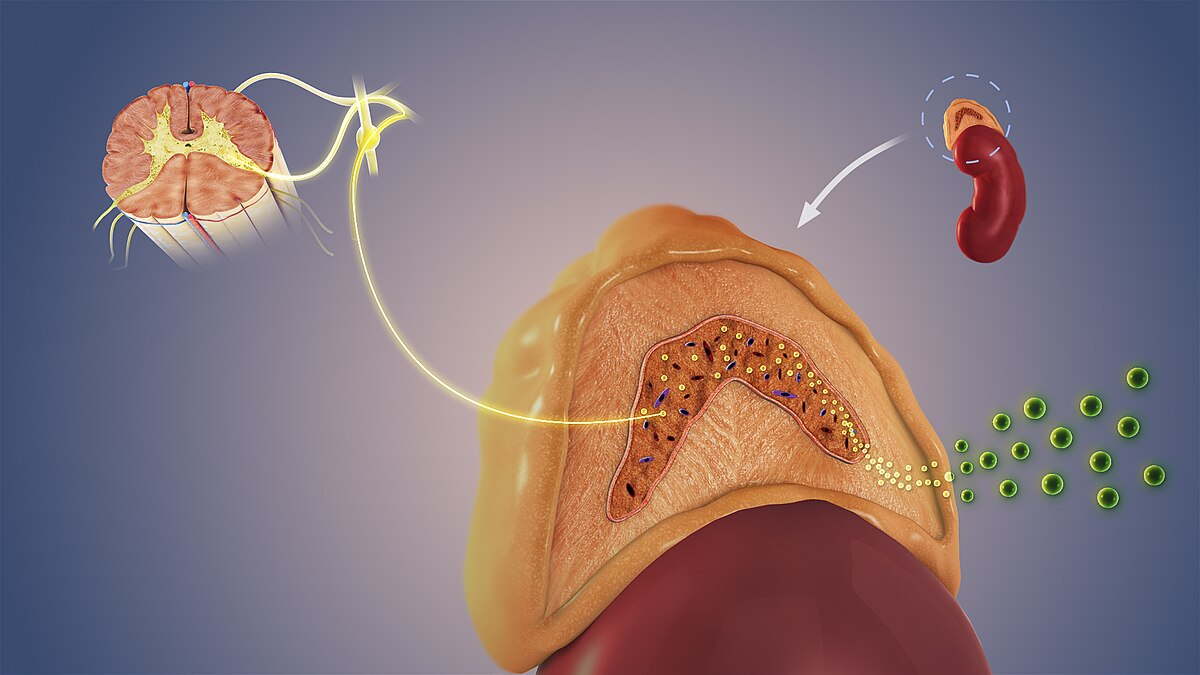
When you get scared or excited, your adrenal glands flood your system with adrenaline. It instantly reroutes blood away from your skin and digestion, dumping oxygen-rich fuel into your muscles and lungs.
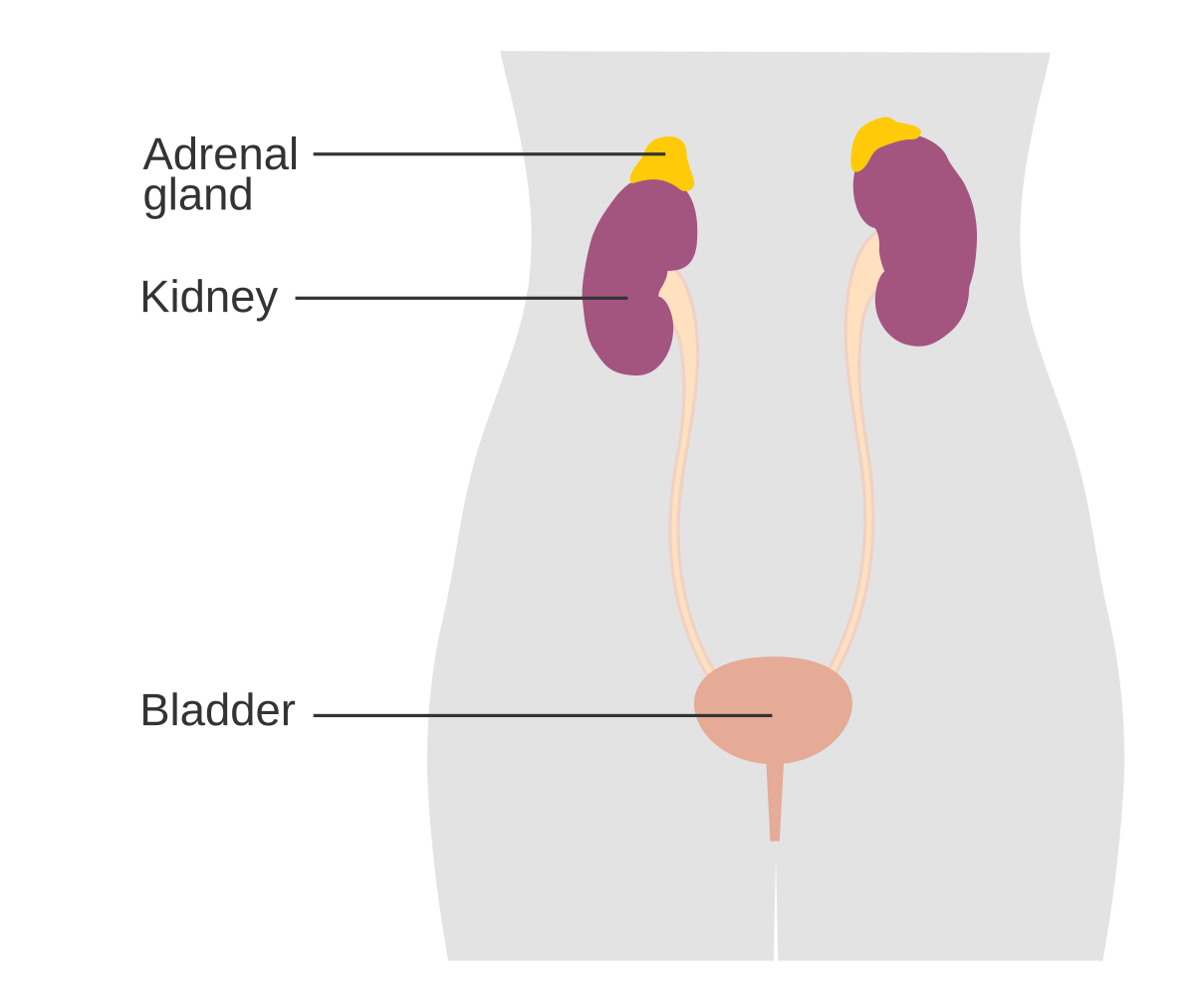
A diagram showing the position of the adrenal glands in the human body, located superior to the kidneys. Cancer Research UK, CC BY-SA 4.0, via Wikimedia Commons
You become a biological machine optimized for survival, whether you are running from a predator or just jumping out of a plane.
The discovery
In 1901, Japanese chemist Jokichi Takamine achieved a medical first: he isolated pure adrenaline from the adrenal glands of cows and sheep. He discovered that even a microscopic amount could restart a stopped heart or open constricted airways.
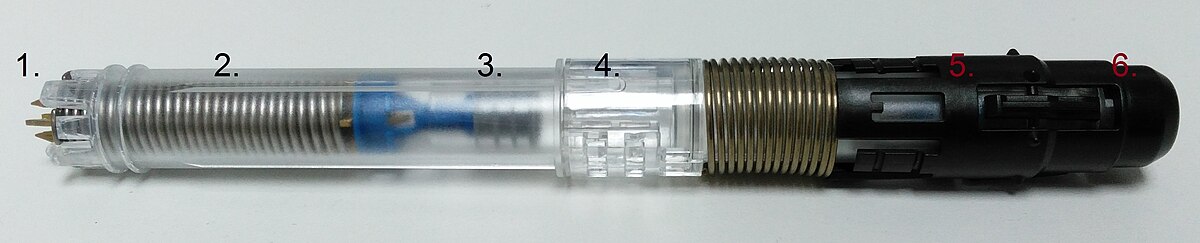
This discovery eventually gave us the EpiPen, the life-saving tool that uses a spring-loaded needle to reverse a severe allergic reaction in seconds.
A disassembled view of an epinephrine autoinjector, showing its internal mechanism. Chemistryroxpharmacysux, CC BY-SA 4.0, via Wikimedia Commons
The ancient hardware
Adrenaline is the same chemical whether you are dying or skydiving. Your internal hardware doesn't know the difference between a mortal threat and a voluntary rush.
That thrill you feel in extreme sports is just your ancient survival software running at maximum capacity.
A 2008 Specialized Stumpjumper full suspension mountain bike is parked against a brick wall. Marnez, CC BY-SA 3.0, via Wikimedia Commons
How adrenaline changes the body
Adrenaline produces physical changes by binding to alpha and beta adrenoceptors spread throughout body tissues. The adrenal medulla, located inside the adrenal glands, provides over 90% of the adrenaline circulating in the bloodstream. A small number of brain neurons in the medulla oblongata also produce it.
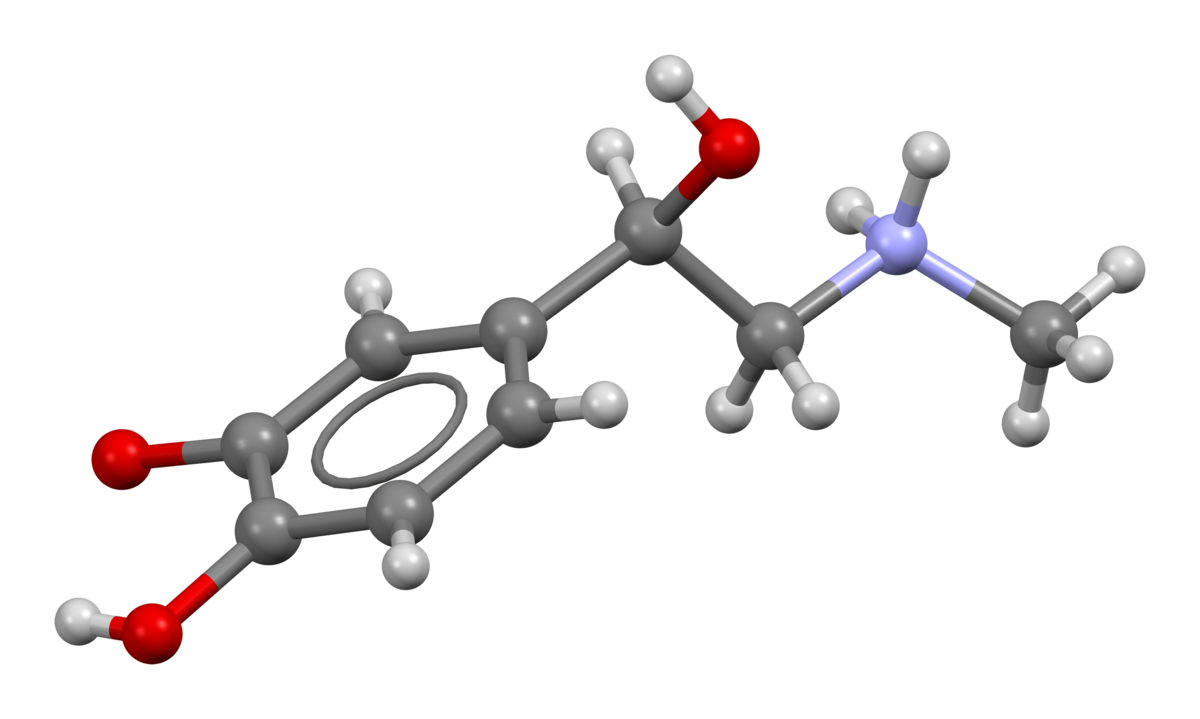
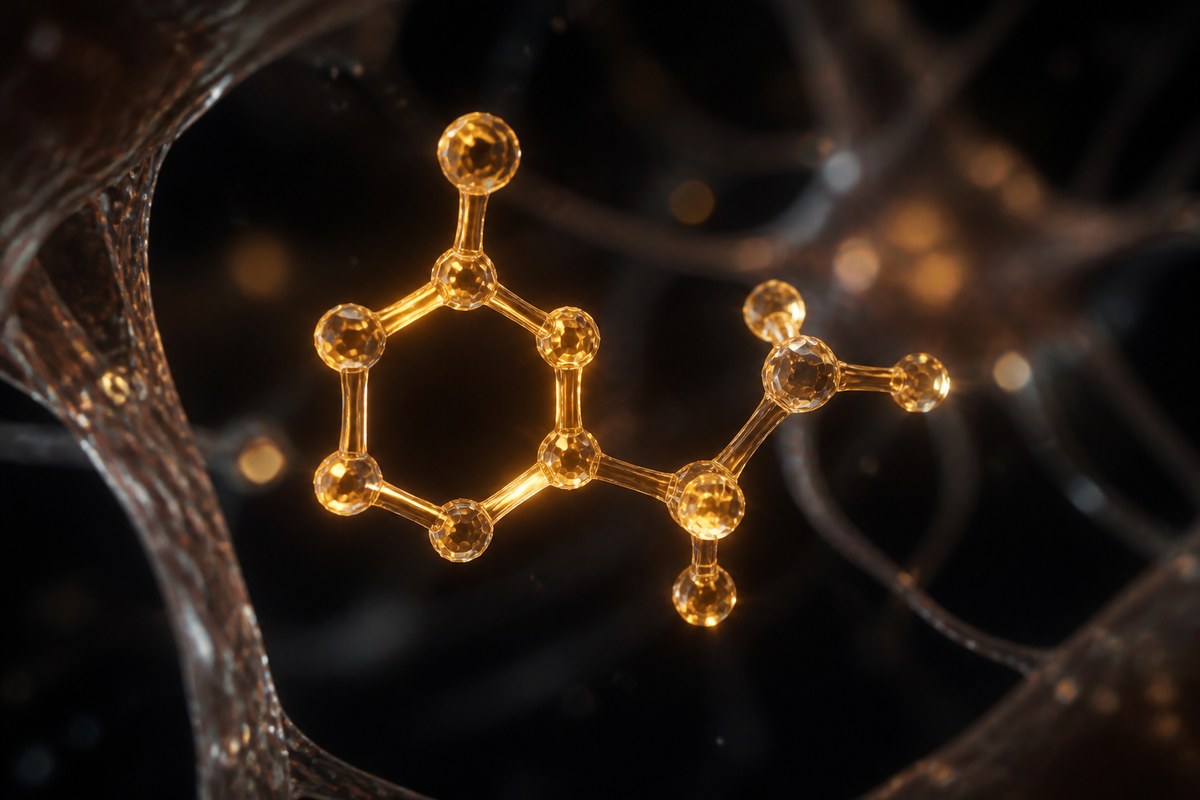
This 3D ball-and-stick model displays the chemical structure of an adrenaline molecule, showing the atoms that bind to alpha and beta receptors. Ben Mills, Public domain, via Wikimedia Commons
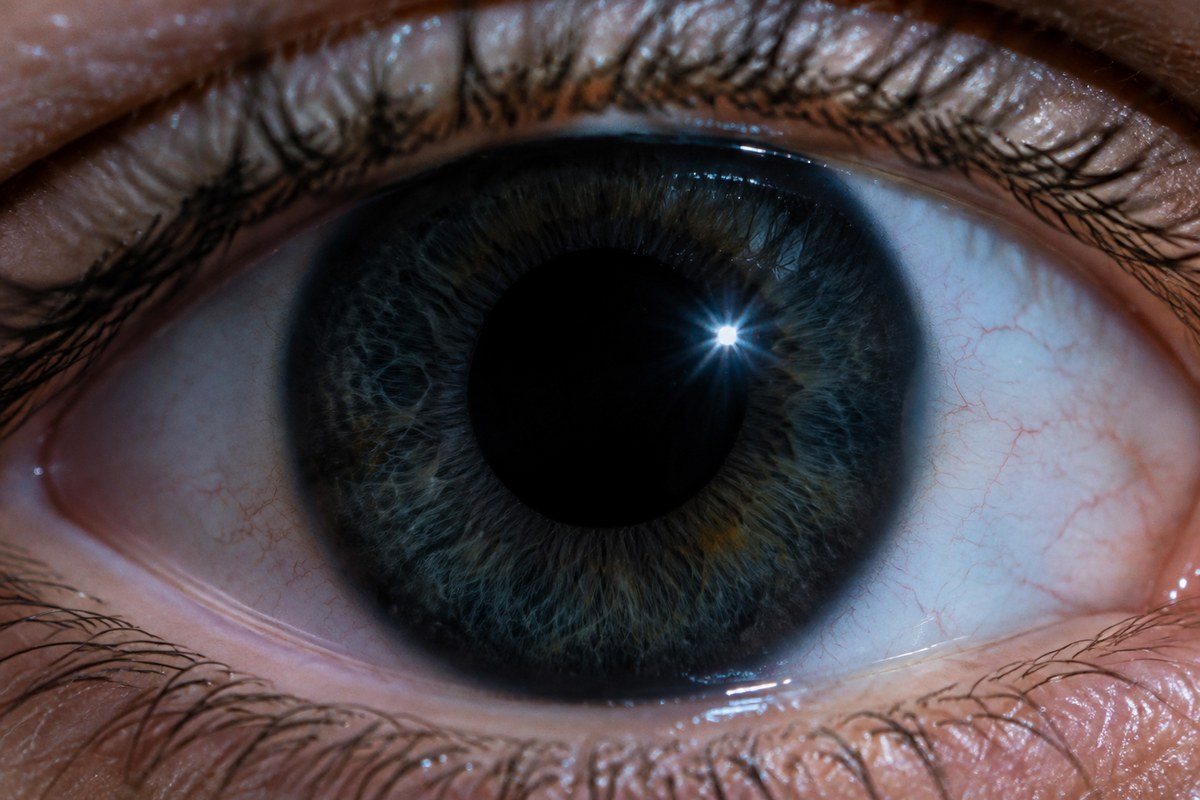
When released during fear or high-intensity exercise, adrenaline increases heart output by acting on the sinoatrial node and shifts blood flow toward skeletal muscles. It also triggers pupil dilation and raises blood sugar levels to fuel immediate physical action.
Medical uses of adrenaline
In modern medicine, adrenaline is a frontline treatment for severe, life-threatening conditions. Injected into muscle or given through an intravenous line, it treats cardiac arrest, severe anaphylaxis, and superficial bleeding. Inhaled adrenaline is used to relieve croup, and it treats asthma attacks when other standard medications fail.
Epinephrine also treats open-angle glaucoma by increasing the drainage of fluid from the eye to reduce internal eye pressure. Common side effects after medical administration include shakiness, anxiety, sweating, rapid heart rate, and elevated blood pressure.
Test yourself
A runner sprains an ankle in a race, finishes, then limps in agony. Why the delay?
The stress response muted pain, then faded. Stress hormones, the brain's own painkillers and strong focus dampened the pain signals. When the surge faded, the pain from the injury, which was there all along, became noticeable.
How does adrenaline make you stronger for a short time?
It sends more fuel and blood to muscles. Adrenaline speeds the heart, widens airways and releases liver sugar, so existing muscles get more fuel and oxygen. It does not build new muscle.
How is the fight-or-flight response designed to work?
As a short burst, then recovery. Adrenaline is cleared within minutes, so the response is built for a brief push followed by recovery. Chronic stress breaks that pattern by retriggering it.
Play the lesson in edgi and the card is yours. It lands on your Map next to the ideas it connects to, and turns from matte to foil to gold as you learn more around it.
What is the difference between adrenaline and epinephrine?
Adrenaline and epinephrine are two names for the exact same chemical compound. In pure form, the substance appears as a white microcrystalline granule.
Is adrenaline found only in humans and mammals?
No, adrenaline appears in many animal species, some single-celled organisms, and has even been extracted from a plant called Scoparia dulcis found in Northern Vietnam.
How does exercise cause adrenaline levels to rise?
During exercise, circulating adrenaline levels climb because the adrenal medulla secretes more of the hormone, while reduced blood flow to the liver slows down how quickly the body breaks it down. Levels spike highest when the body transitions to anaerobic metabolism.