Facial symmetry is the structural balance between the left and right sides of a person's face. It serves as an evolutionary indicator of developmental health, signaling genetic stability and an absence of major environmental stress during growth. Because of this biological signal, more symmetrical faces are consistently rated as more attractive in mate selection.
By the edgi team We find the most surprising true thing about an idea and build a 60-second lesson around it.
Our brains are hardwired to scan faces for a single signal: symmetry. It acts as a biological proxy for health. Developing a perfectly balanced face requires robust genes and a lack of disease during development.
When we judge physical attractiveness, we are not just looking for beauty; we are scanning for developmental stability.
The record of stress
Perfect symmetry is rare in nature. Most people have minor, random differences between the left and right sides of their face. Biologists call this fluctuating asymmetry. It serves as a silent record of the environmental stress an organism faced while growing up.
The smell of genetics
The preference is so deep it bypasses the eyes entirely. In a famous 1994 study, researchers asked women to smell t-shirts worn by men.
They consistently preferred the scent of men with more symmetrical faces, even without ever seeing them. Our process for mate choice is not just visual; it is ancient, sensory, and relentless, guided by the deep logic of human evolution.
Fluctuating asymmetry versus directional asymmetry
Human faces deviate from balance in two distinct ways: random variation and systematic population bias. Fluctuating asymmetry refers to random differences between the two sides of a person's features relative to the midline. These small, non-systematic shifts reflect developmental stress.
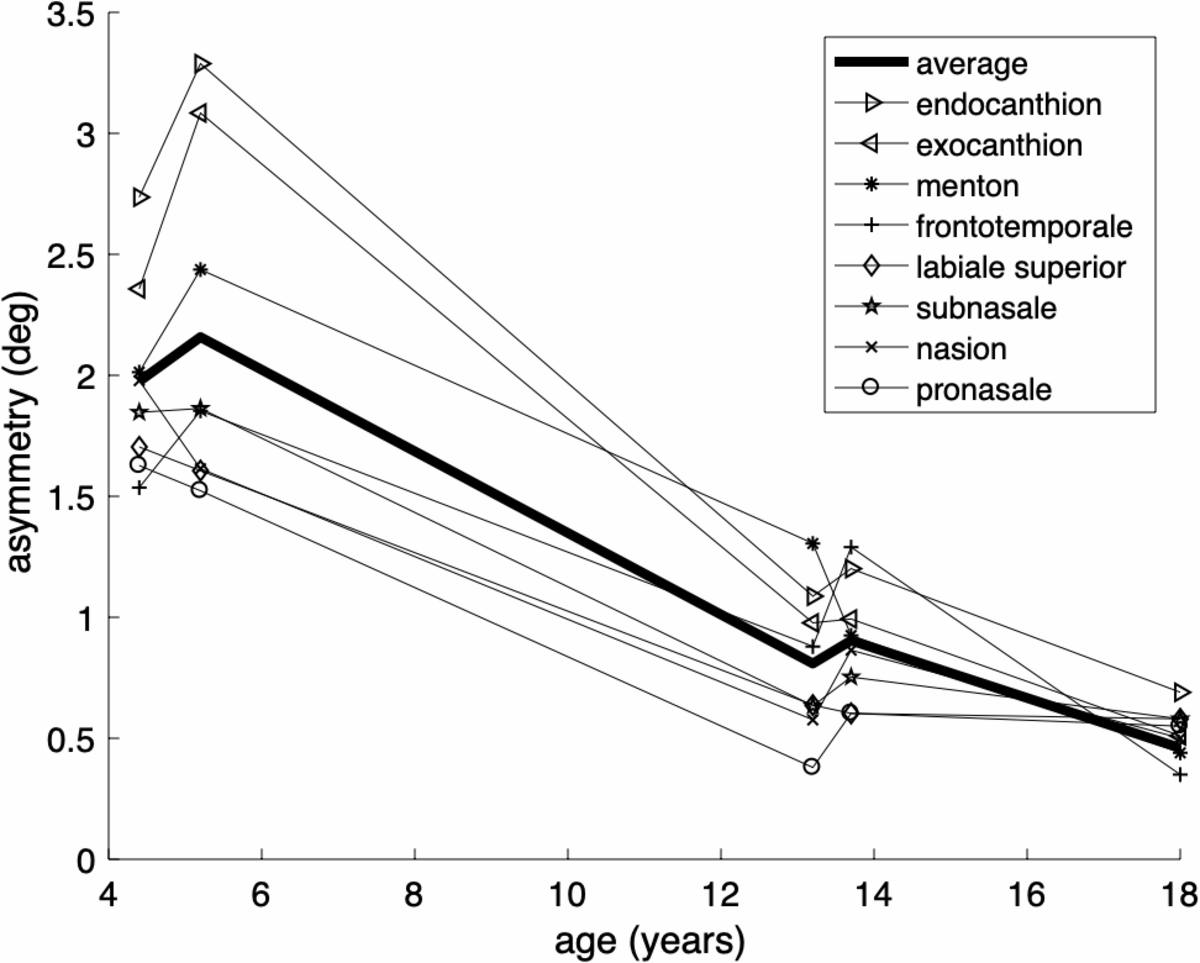
This chart shows how aurofacial asymmetry decreases from around two degrees at birth down to half a degree in adulthood as the face grows. Marc HE de Lussanet, CC0, via Wikimedia Commons
Directional asymmetry is systematic across entire populations. The human face is not centered between the ears; instead, features such as the mouth, nose, and eyes sit systematically offset to the left relative to the ear axis. Known as aurofacial asymmetry, this leftward offset makes the right side of the face appear larger. The tilt begins around 2 degrees at birth and decreases through growth to about 0.5 degrees in adults.
How symmetry shapes beauty and aging
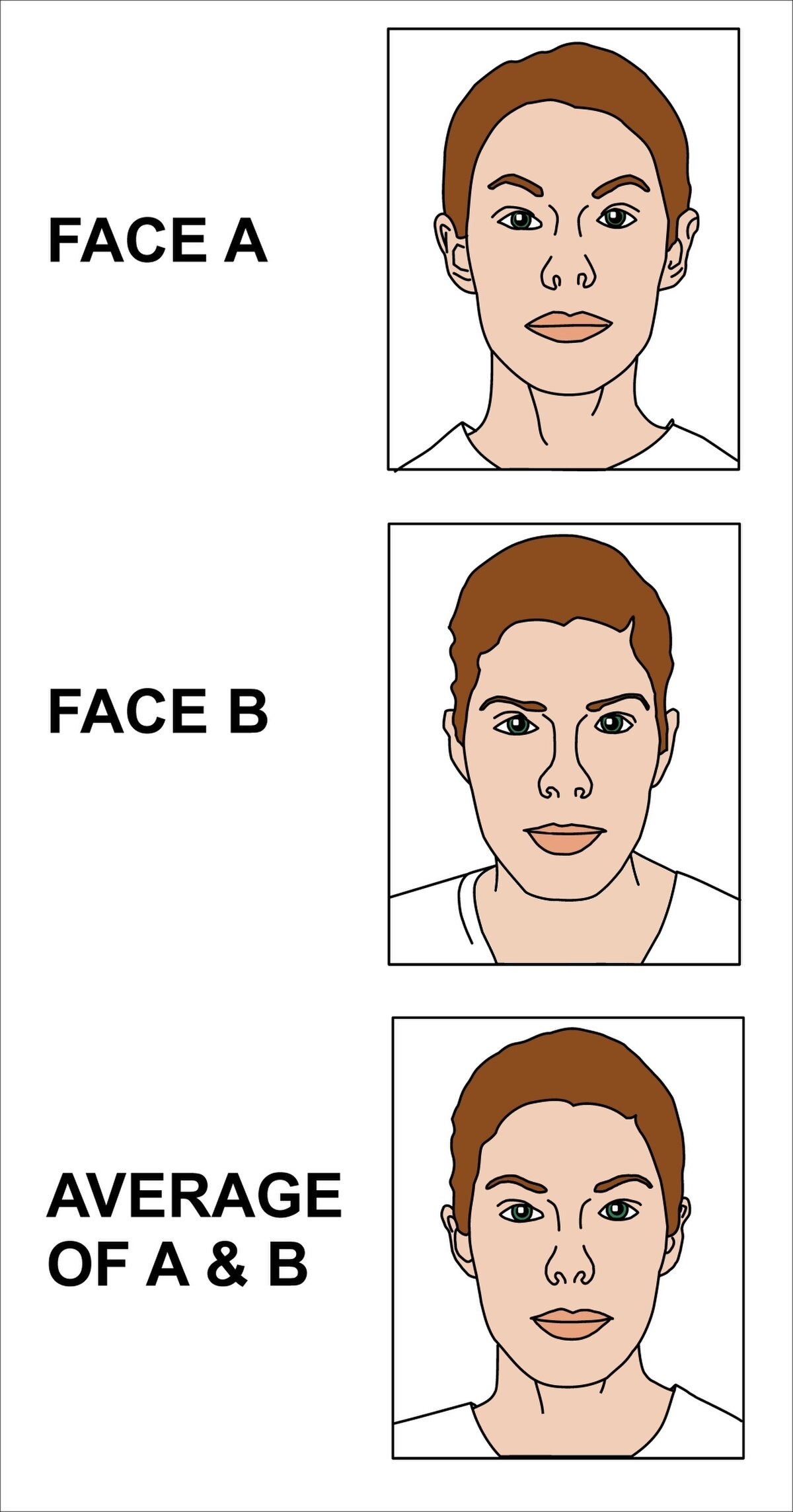
Symmetry increases attractiveness ratings for both male and female faces, playing an even larger role in judgments of female beauty. Researchers test this using composite blending or face-half mirroring, although mirroring can create distortions like unnaturally wide or small noses.
A natural portrait demonstrates the subtle, normal variations between the left and right halves of a human face. Stylewalker, CC BY-SA 3.0, via Wikimedia Commons
Facial symmetry also acts as a marker of cognitive aging. Progressive changes in facial soft tissues over a lifespan make asymmetry more prominent in older adults. Making older faces symmetrical increases their perceived attractiveness, whereas digitally enforcing symmetry on children or young adults actually decreases their attractiveness.
Dynamic movements create temporary asymmetries. During speech, 76 percent of people move the right side of their mouth with greater amplitude due to connections between the left brain hemisphere and the right side of the face.
Test yourself
What does human facial symmetry primarily signal during mate choice?
Developmental stability and health. Facial symmetry acts as a biological proxy for health, signaling robust genes and low environmental stress during development.
How do fluctuating facial asymmetries function as a record of an individual's past?
As a silent record of environmental stress during growth. Fluctuating asymmetry reflects minor, random differences caused by environmental stress and disease faced while growing up.
How do fluctuating facial asymmetries function as a record of an individual's past?
As a silent record of environmental stress during growth. Fluctuating asymmetry reflects minor, random differences caused by environmental stress and disease faced while growing up.
Play the lesson in edgi and the card is yours. It lands on your Map next to the ideas it connects to, and turns from matte to foil to gold as you learn more around it.
It is an evolutionary theory predicting that the early embryo's head twists counter-clockwise while the body twists clockwise. This theoretical twist between the ears and face explains why human facial features systematically grow inward from the left toward the midline.
Do symmetry and averageness mean the same thing in attractiveness?
No, experiments show that facial symmetry and facial averageness make independent contributions to physical attractiveness. Averageness refers to how closely a face matches population norms, while symmetry measures balance between the left and right sides.