Stock MarketTurning company shares into liquid cash
A stock market is a collection of buyers and sellers trading shares, which represent fractional ownership claims on companies. By letting investors trade these shares with one another, it allows businesses to raise capital upfront without having to refund investors directly. Today, it acts as a massive global pricing engine, valuing future business profits in real time.
By the edgi team We find the most surprising true thing about an idea and build a 60-second lesson around it.
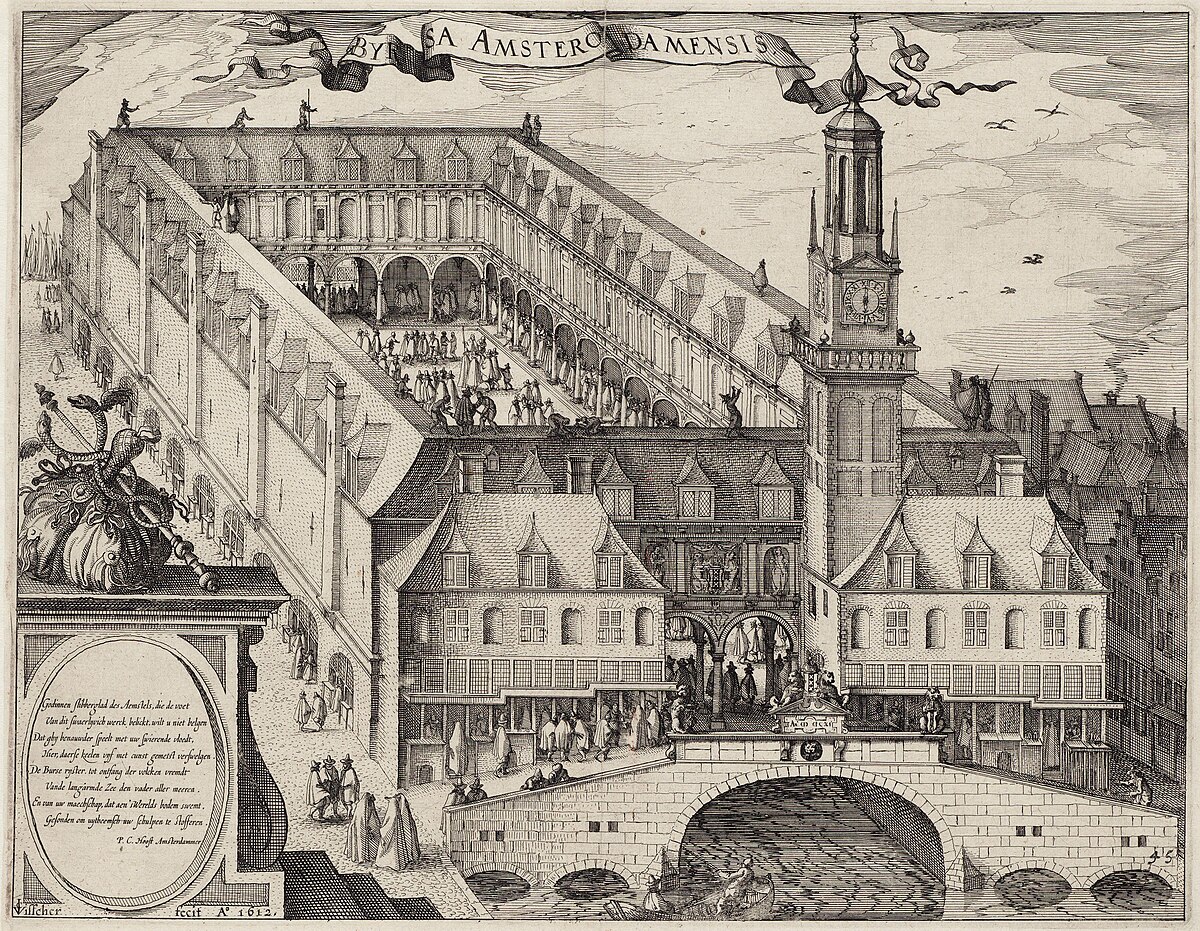
The stock market was born in 1602 in Amsterdam. The Dutch East India Company was planning dangerous, expensive voyages to the Spice Islands.
A 17th-century engraving depicting the Amsterdam Stock Exchange (Beurs van Hendrick de Keyser), showing a large, rectangular courtyard building with a prominent clock tower. Visscher, Claes Jansz (1587-1652), Public domain, via Wikimedia Commons
Instead of taking out loans, they sold permanent ownership shares to the public. Investors couldn't demand their money back from the company, so they had to sell their shares to others to get cash. This created the world’s first secondary market.
The machine
At its core, the stock market is a machine that converts future expectations into present cash. A company gets capital today by promising a slice of its future profits.
A meeting of the Federal Reserve Board of Governors in April 2019, with several individuals seated around a large wooden conference table. Federalreserve, Public domain, via Wikimedia Commons
The stock price is just the market’s collective guess about how much that future is worth.
The consequence
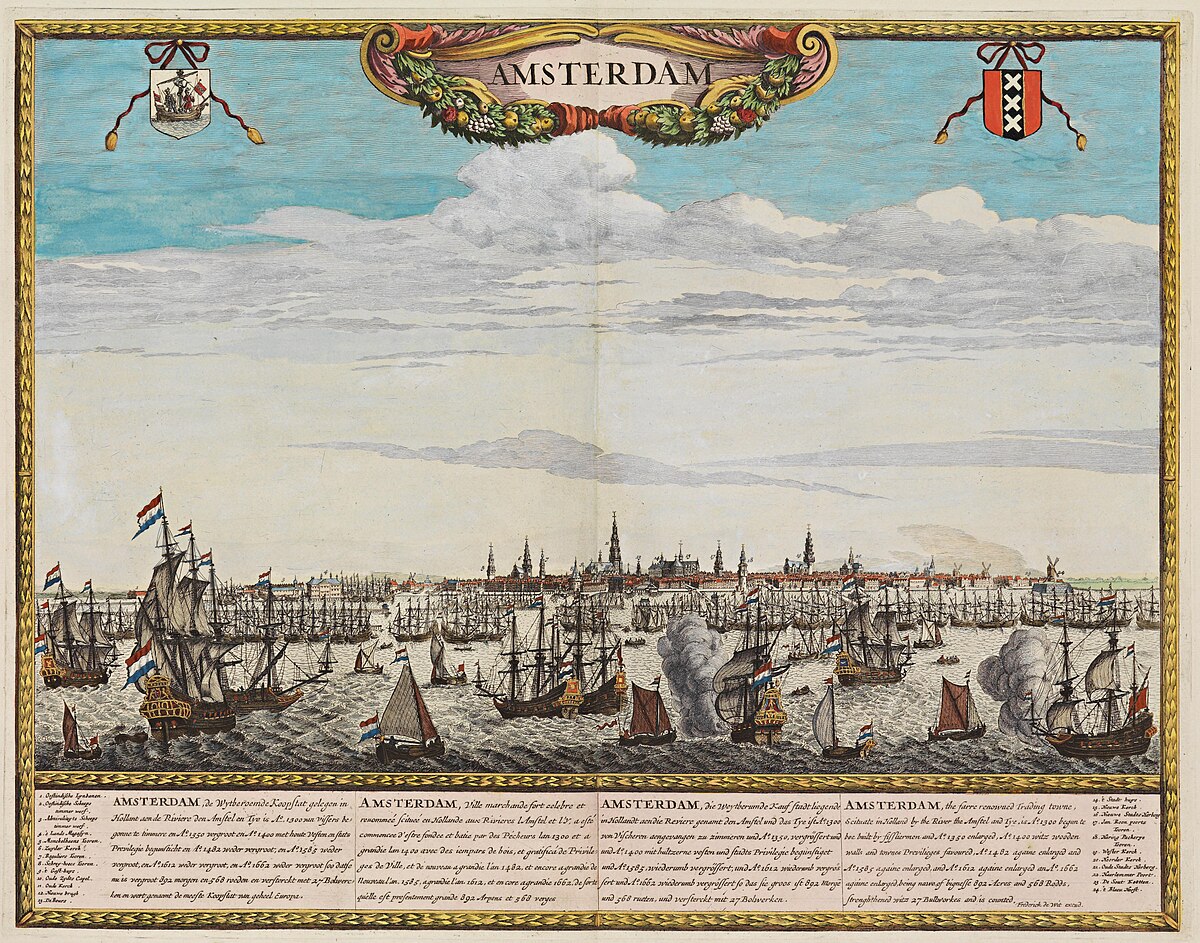
This system turned Amsterdam into the world’s first financial superpower. Today, that same mechanism powers everything from an Initial public offering to complex Exchange-traded funds.
A panoramic historical map titled "Amsterdam vanaf het IJ Panorama 1699 Frederik de Wit" shows a view of Amsterdam from the IJ river in 1699. Frederik de Wit, Public domain, via Wikimedia Commons
It is still just a 400-year-old bet that tomorrow will be more productive than today.
How trading and price discovery work
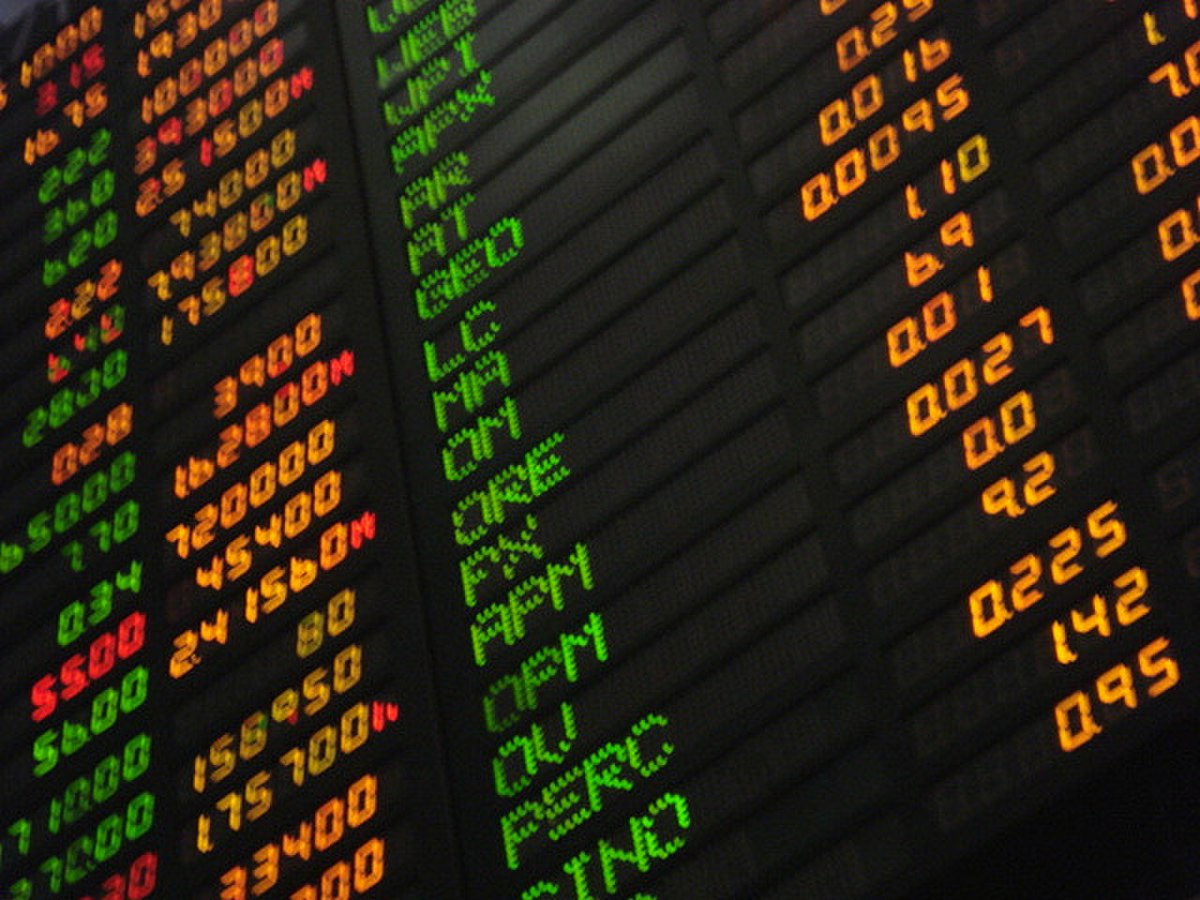
A trade happens whenever a buyer's bid matches a seller's ask price. If an investor chooses to buy or sell at the market, they accept whatever current bid or ask is available. When matching prices occur, orders execute on a first-come, first-served basis.
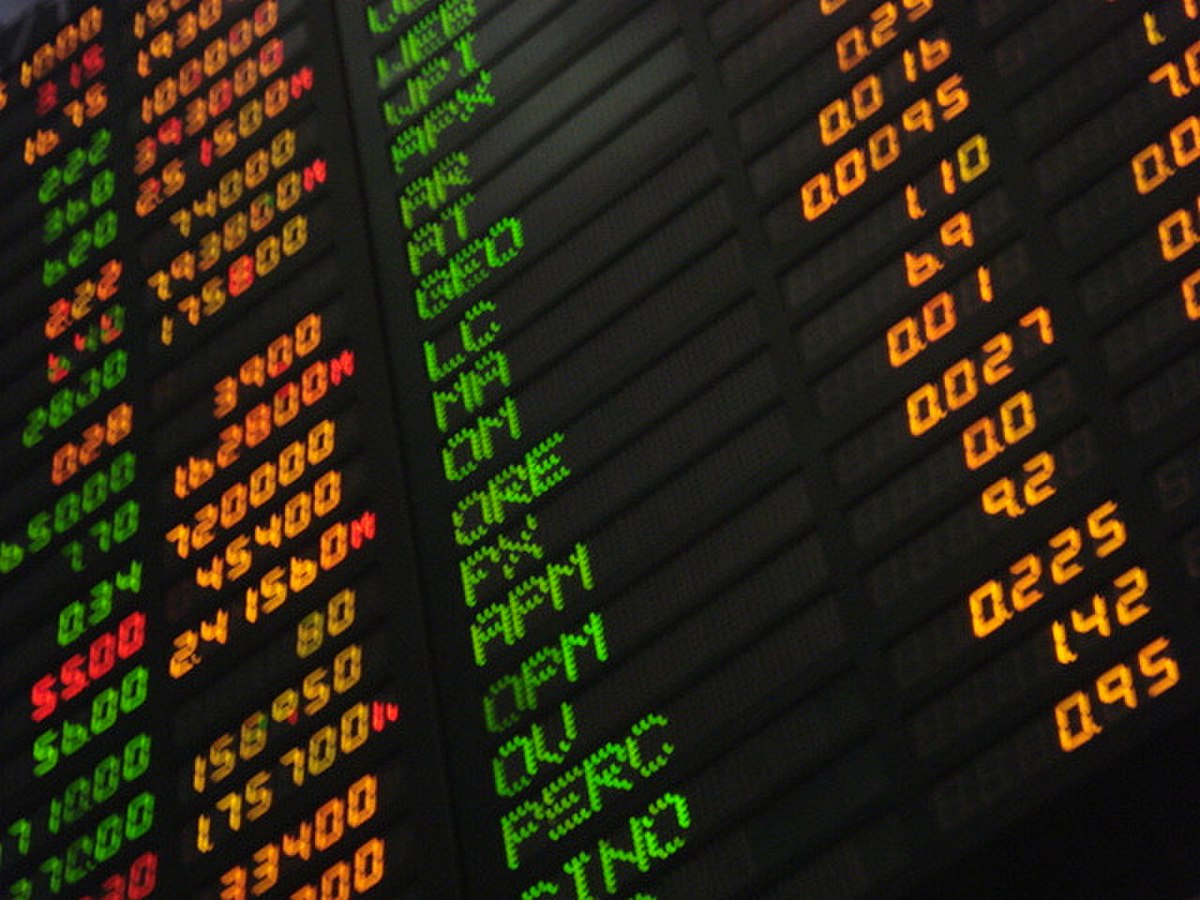
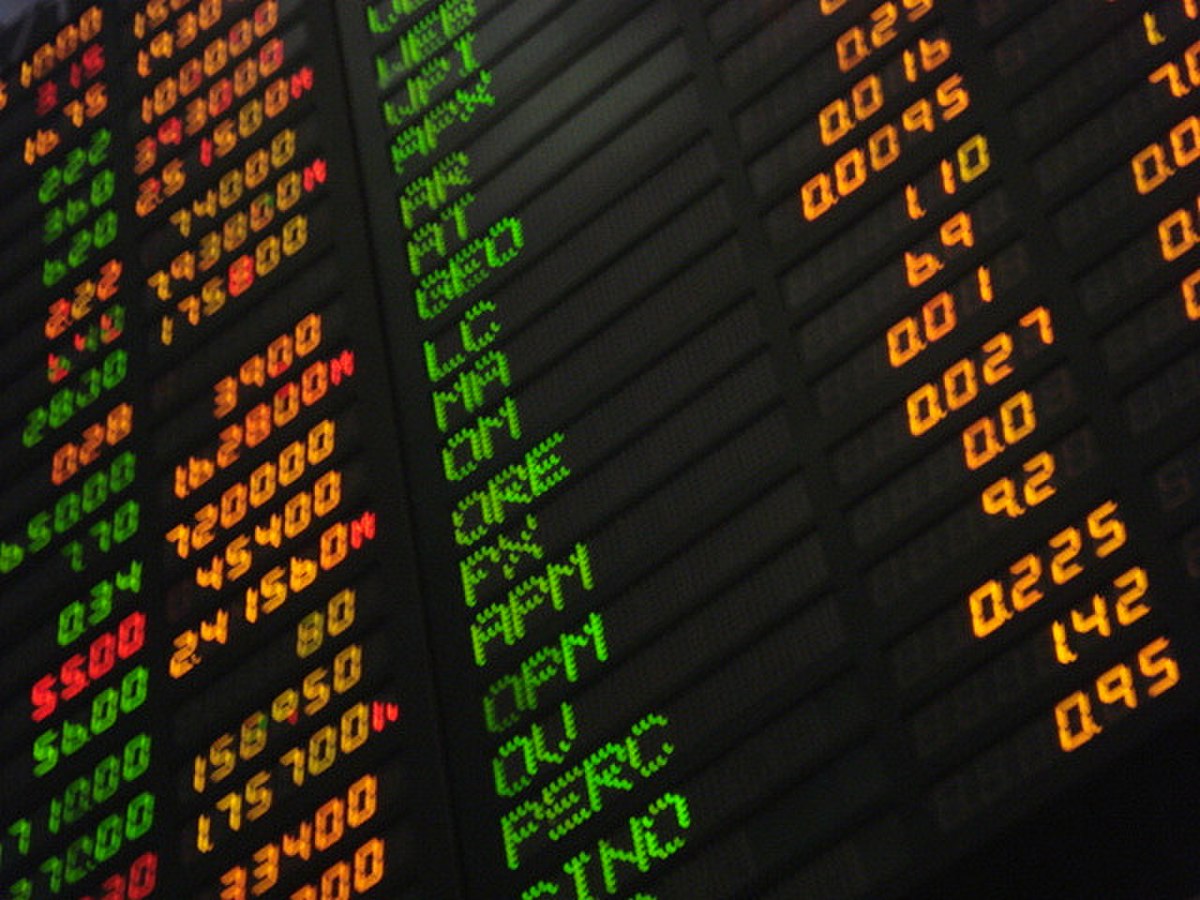
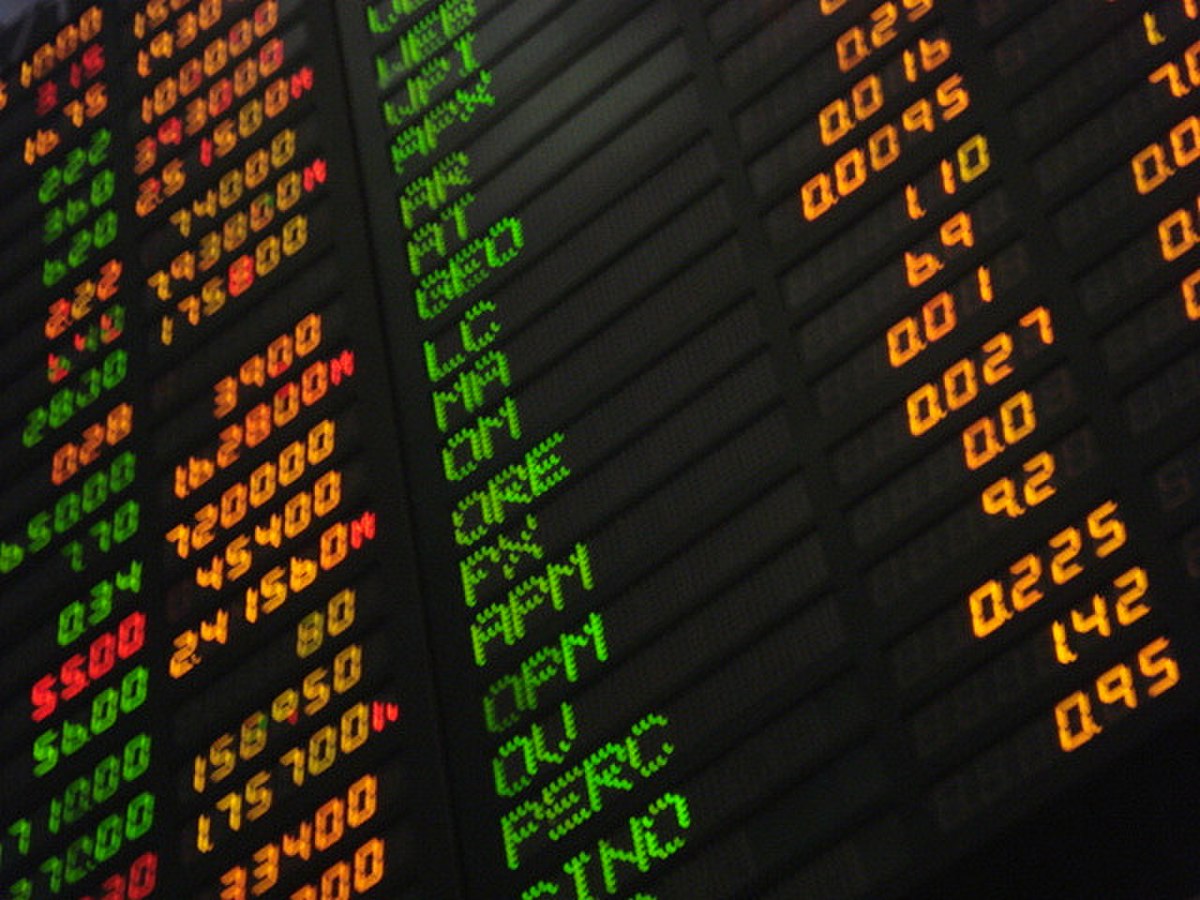
Real-time stock tickers and electronic display boards broadcast matching bid and ask prices to investors. Katrina.Tuliao, CC BY 2.0, via Wikimedia Commons
To keep trading smooth, exchanges rely on market makers. On the New York Stock Exchange, a Designated Market Maker steps in with their own capital or shares when buyers and sellers cannot agree on a price, narrowing the bid-ask spread and keeping trades moving. Once completed, the trade details are reported on the tape and sent to brokerages.
Physical trading floors versus electronic networks
Historically, stock exchanges were physical rooms where traders shouted offers at each other using a method called open outcry. The Paris Bourse used this trading floor model until modernizing with automated systems like CATS in the late 1980s.
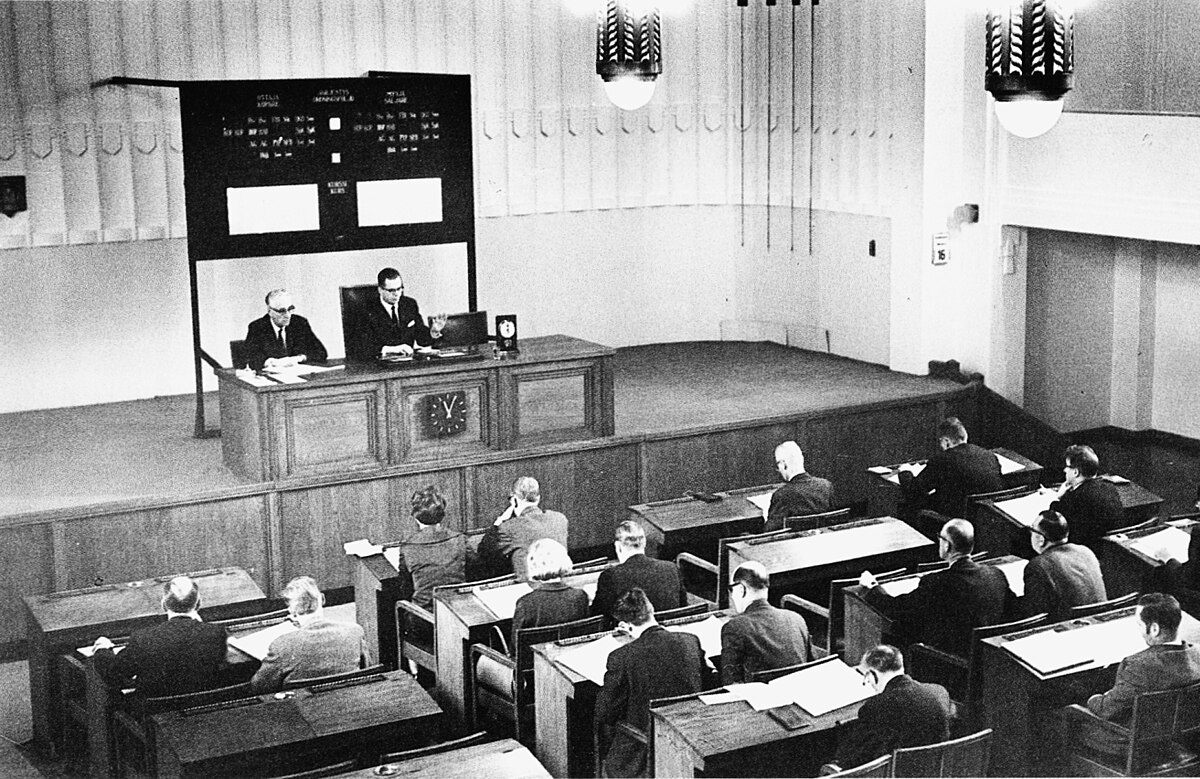
Mid-20th-century trading rooms required manual record-keeping on display boards before order matching became automated. AnonymousUnknown author / Kuva-Markko, Public domain, via Wikimedia Commons
Modern markets run largely or entirely through electronic computer networks. The NASDAQ has no physical trading floor at all, matching orders purely through connected computers, while the New York Stock Exchange operates a hybrid setup combining electronic matching with floor brokers.
Who participates and how large the market is
The market connects individual retail investors with massive institutions, including pension funds, hedge funds, mutual funds, insurance companies, and automated robo-advisors. Companies themselves also trade on exchanges, sometimes buying back their own shares.
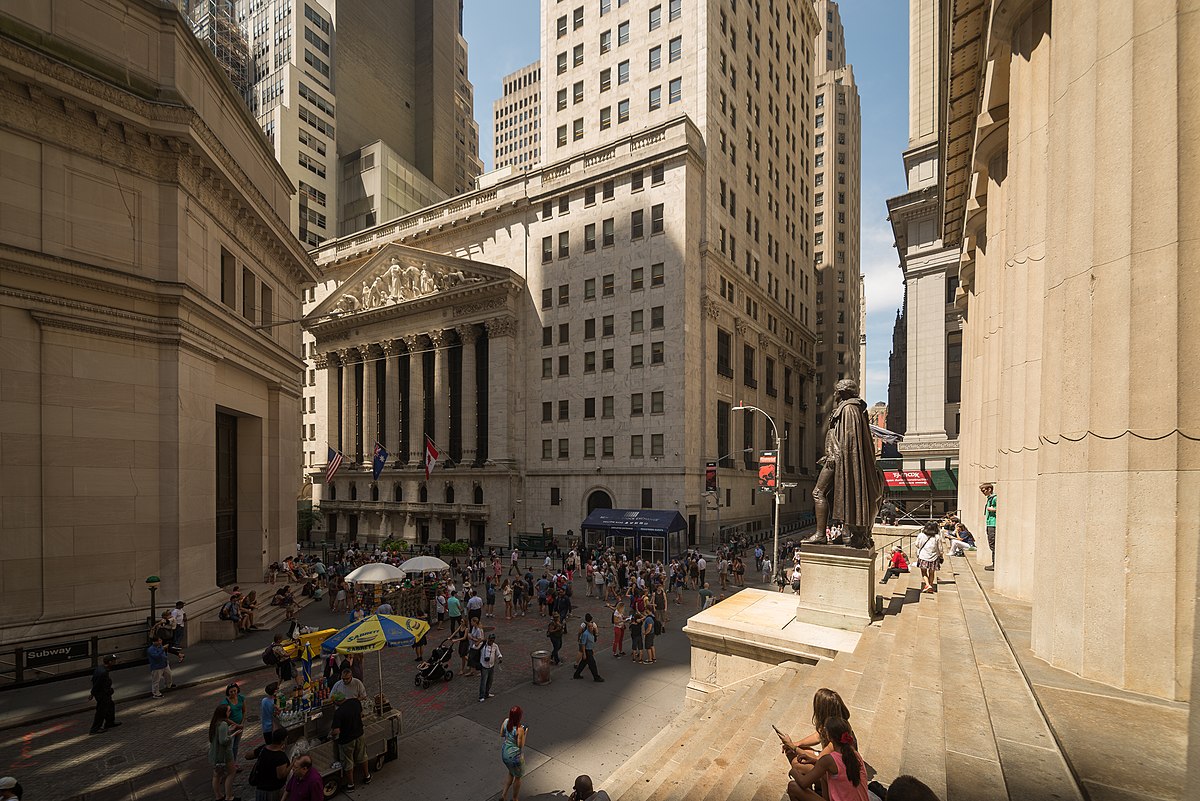
The New York Stock Exchange anchors the United States market, which represents nearly 60% of all global equity value. Arild Vågen, CC BY-SA 4.0, via Wikimedia Commons
This network has expanded dramatically over recent decades. Total global market capitalization rose from $2.5 trillion in 1980 to $111 trillion by the end of 2023. Out of roughly 60 exchanges worldwide, just 16 hold over $1 trillion in capitalization each, accounting for 87% of global equity value.
Test yourself
You buy at $50 and later sell at $70. Where does the $20 come from?
A later buyer paying more. Selling higher means another buyer agreed to pay a higher price. The company itself pays out only through dividends.
Which choice best lowers the risk of one company's failure ruining your savings?
Owning an index fund of hundreds of firms. Spreading money across many companies means one failure is a small part of the total. Concentrating or panic selling raises the chance of a big or locked-in loss.
What does a stock's market price mainly represent?
Investors' estimate of future value. A stock price reflects the market's collective estimate of the value of future profits; it is neither a snapshot of cash reserves nor a guaranteed payout.
Play the lesson in edgi and the card is yours. It lands on your Map next to the ideas it connects to, and turns from matte to foil to gold as you learn more around it.
As of January 2022, the United States holds roughly 59.9% of the world's stock market value. Japan ranks second at approximately 6.2%, followed by the United Kingdom at around 3.9%.
What does it mean when a stock is traded over the counter?
Over-the-counter trading occurs directly through a dealer rather than on a centralized, public exchange floor or order book. Derivatives and unlisted company shares are frequently bought and sold through these over-the-counter channels.